
Digital Marketing Solutions Summit | Forum Events Digital Marketing Solutions Summit | Forum Events Digital Marketing Solutions Summit | Forum Events Digital Marketing Solutions Summit | Forum Events Digital Marketing Solutions Summit | Forum Events

Posts By :

Stuart O'Brien

SME confidence holds firm ahead of Christmas period

For the first time this year, small business confidence has held firm from one quarter to the next – with marketing services sectors seeing growth forecasts rise on Q2 levels.

After the Government announced its three-tier Covid restrictions, new research suggests the avoidance of a second national lockdown and certainty of direction until March has had a positive impact on UK small business confidence.

The findings come from a rolling study from Hitachi Capital Business Finance that has tracked small business growth forecasts every quarter for the last six years. Before Covid-19 struck – and even during the period of the Brexit vote – the percentage of small businesses predicting growth for the three months ahead stayed at between 36-39% for six consecutive quarters.

In April 2020, this crashed overnight to just 14% of small businesses predicting growth. 

The UK’s re-emergence from lockdown in July 2020 saw a sharp resurgence in confidence, with the percentage of small business owners predicting growth for the next three months doubling to 27%. The latest data conducted this week by Hitachi Capital reveals that the percentage of small businesses predicting significant and modest growth remains unchanged since summer months (27%). Further, the Q4 data reveals the third consecutive quarter where the percentage of small businesses fearing collapse has fallen – down from a high of 29% in Q2 2020 to a current figure of 12% for Q4 2020.

Joanna Morris, Head of Insight at Hitachi Capital Business Finance, said: “Despite the changed context from the summer months, with Covid numbers now again rising sharply, our data suggests small businesses are reacting positively to the current circumstances. The avoidance of national lockdown and the consensus that there will be restrictions through until March has at least given small business owners a degree of certainty against which to plan. 

“Our figures for 2020 show that small business confidence has had sharp rises and falls since the pandemic struck. Our new research conducted the day after the Government’s announcement on three-tier restrictions gives the first reaction from the small business community. The stabilising of confidence levels between Q2 and Q3 is a really important development as it suggests smaller enterprises (that can operate) are adapting to the new reality – and accept the prospect that we may all be in for a long-haul fight against Covid.” 

By sector the research also gives a welcome boost for the high street. Ahead of the critical Christmas period, there was a marked rise in the proportion of retail small businesses predicting growth (up from 27% to 35% in three months). The property and marketing services sectors also saw growth forecasts rise on Q2 levels.  

Conversely, growth forecasts in manufacturing fell sharply (down from 30% to 23% in three months) – and the hospitality sector remained in a serious position; here only 18% of small business owners predicted any form of growth, whilst 53% predicted contraction. Overall 29% of hospitality sector small businesses predicted they would struggle to survive, more than double the national average (12%).


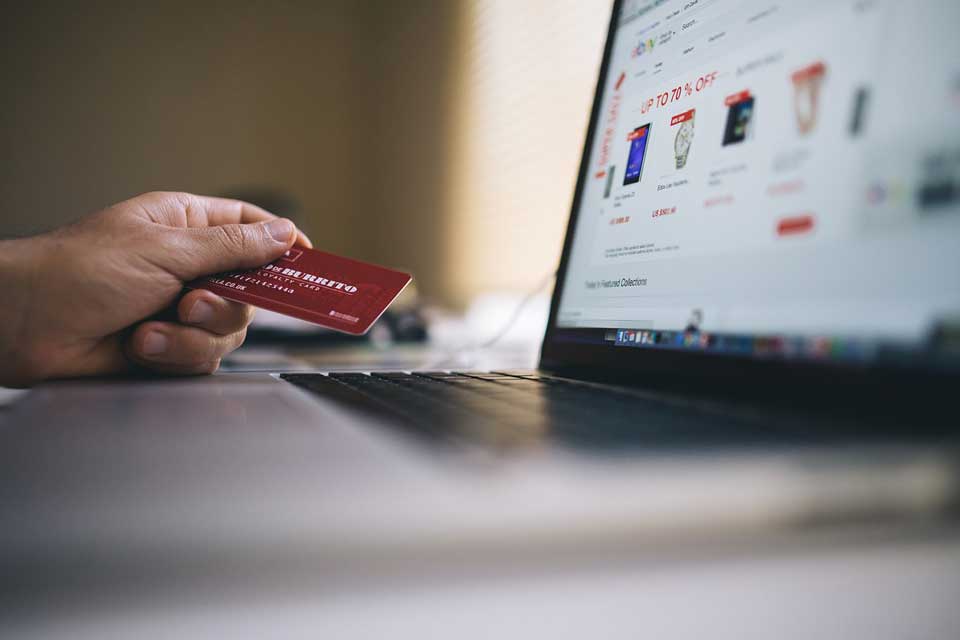
Half of consumers will turn to Amazon for their Christmas shopping this year

Just under a half of UK shoppers (44%) plan to complete their Christmas shopping online this year — with a majority (42%) looking to turn to Amazon first.

That’s according to findings from the Episerver report “An Interview with The Couch Shopper: The Episerver Holiday Ecommerce Report 2020,” for which the firm surveyed 4,050 online shoppers across the world and performed 1.6 billion website sessions to uncover the behaviors and trends shaping the future of e-commerce.

The survey revealed that 42% of UK shoppers plan to buy most of their Christmas presents on Amazon this year, and 8% say they plan to buy all of their gifts on Amazon.

The study found that in general, 37% of UK online shoppers visit Amazon first when they have a specific product they’re looking to purchase, and 35% begin their shopping journey on Amazon even when they do not have a specific product in mind. 

Whether it’s with Amazon or another retailer, there will be an exponential increase in online Christmas shopping this year, amid the ongoing pandemic, and a majority of which will occur through mobile devices. In its analysis of web traffic, Episerver found that 2020 e-commerce traffic overall spiked 18% year-over-year, and mobile traffic specifically ticked up 5% year-over-year — now accounting for 59% of all traffic to retail websites. 

Episerver’s survey of consumers revealed the most active shoppers are also the most likely to use their smartphones: 53% of consumers who said they shop online every day primarily rely on their smartphones to do so. When viewed as a whole, the report’s findings indicate the need for retailers to tailor their content to consumers across all types of channels and to deliver a mobile-first shopping experience this Christmas and beyond.

“As Amazon claims an increasingly larger share of the market, retailers and brands can no longer compete by using broad promotions to stand out or catch consumers’ eyes,” said Josh Schoonmaker, senior director of strategy, commerce, at Episerver. “Instead, retailers must draw consumers in with intuitive online shopping experiences, compelling content, and personalised recommendations or offers.”

You can download “An Interview with The Couch Shopper: The Episerver Holiday Ecommerce Report 2020” here.

Do you specialise in Creative & Design services? We want to hear from you!

Each month on Digital Marketing Briefing we’re shining the spotlight on different parts of the print and marketing sectors – and in November we’ll be focussing on Creative & Design services.

It’s all part of our ‘Recommended’ editorial feature, designed to help marketing industry professionals find the best products and services available today.

So, if you specialise in Creative & Design solutions and would like to be included as part of this exciting new shop window, we’d love to hear from you – for more info, contact James Howe on j.howe@forumevents.co.uk.

Here are the areas we’ll be covering, month by month:

Nov – Creative & Design
Dec – Online Strategy
Jan – Content Management
Feb – Lead Generation & Tracking
Mar – Email Marketing
Apr – Digital Printing
May – Social Media
Jun – Brand Monitoring
Jul -Web Analytics
Aug -Conversion Rate Optimisation
Sep -Digital Signage
Oct -Brochure Printing
Nov – Creative & Design
Dec – Online Strategy

eTailing Summit: February’s unmissable event is now virtual

Due to recent announcements and government updates, we have made the decision to make the eTailing Summit VIRTUAL!

11th February 2021

Still offering you the same benefits as the live event – we will bring together the industry’s leading buyers and suppliers together for business collaboration.

Your bespoke place is entirely free and includes benefits such as;

  • Prepare for every eventuality – We can build you a bespoke 1-2-1 itinerary of meetings with innovative and budget savings suppliers who match your requirements.
  • Gaining industry insight – Enjoy a series of topical webinars led by industry thought leaders.
  • Flexibility – Your attendance is flexible, you can either attend for half a day or the whole duration.
  • Save time – We will handle everything for you, saving you time and money by arranging all the meetings for you based on your requirements.

Click here to secure your free place.

Facebook and Artefact team up for marketing attribution guide

Facebook and data marketing consultancy Artefact have released a practical, step-by-step guide they say will help businesses make the most of marketing attribution – the process of tracking and ranking the importance of marketing actions along the customer journey.

This first joint publication reveals that marketers who make attribution a business priority can double the marketing efficiency of their business. The partners say studies have shown that omnichannel shoppers have a 30% higher lifetime value than single channel customers, and the guide explains how to capitalise on this using the Facebook Attribution tool.

The guidebook explores how attribution is the critical next step of data-driven marketing maturity, with impact beyond digital practices. It also demonstrates how attribution is one of the most important accelerators towards a digital-first and consumer-centric business model and mindset.

The guide says better attribution pushes organisations and brands to move from discrete touchpoints planning to gluing together holistic consumer journeys. This reasoning is illustrated through three client cases showcasing best-in-class experiences with Etam, Europcar and TUI.

Other elements explored in the guidebook include:

  • How customer data collection can be enriched for attribution quality and accuracy
  • Why attribution is a critical enabler of efficient marketing (cost optimisation) and personalised experiences (message optimisation).
  • What are the key pillars of an attribution project using Facebook Attribution (measure – understand – allocate) and which stakeholders need to be engaged in the process.
  • The key steps and best practices to successfully implement Facebook Attribution and accelerate your measurement journey.

Download Facebook and Artefact’s Attribution Guidebook.

82% won’t buy from outdated websites

Three in four Americans agree that how a company presents themselves online is more important now than ever before.

In fact, the average American abandons 24 online purchases per year because a company’s website looks unprofessional, according to new research.

A new survey of 2,000 Americans and 500 American small business owners found that how a company portrays themselves online is becoming increasingly important.

Just in the past month, the average American hasn’t gone through with $61 worth of purchases due to a brand’s website giving them pause.

The study, conducted by OnePoll on behalf of GoDaddy, went on to show that 82% of Americans say they’re less likely to buy something from a company if their online presence is unprofessional or dated.

Six in ten Americans go so far as to say they are “disappointed” when they go to shop with a company and they don’t have a sleek, modern website.

But it’s not just official websites. Half of those polled say they’re “disappointed” when a brand they want to shop with has no social media presence.

And two in three say they would think twice about shopping with a company if they had an unprofessional or dated social media presence.

Nearly three in four (72%) say they are much more conscious of a brand’s online image now than they were just five years ago.

One in three say they enjoy a brand that has a “quirky” online presence, with 58% saying they’ve shopped with a brand specifically because one of their social media posts grabbed their attention.

With the world shifting more online, are small business owners aware that their bottom line is affected by how their website and social media presence looks?

According to the results, they’re highly aware.

Nearly every SBO polled (92%) said they felt like their website appearance affected their sales, with nearly the same amount saying the same about their social media presence.

But they could maybe use a hand when it comes to their own online presence.

Claim your place at next year’s Digital Marketing Solutions Summit

Are you able to attend the next Digital Marketing Solutions Summit? Live or virtual delegate options are available, so either way we’ve got you covered! 

13th May 2021 – Hilton London Canary Wharf

This unique Summit is hybrid, which allows you to attend either in-person at the live event or via our virtual platform – whichever suits you the best!

Your place is entirely complimentary and includes;

  • A personalised itinerary of relaxed 1-2-1 meetings with budget-saving suppliers who match your needs for upcoming projects
  • Access to a live insightful seminar session led by an industry thought leader
  • A wealth of pre-recorded webinars
  • Lunch and refreshments throughout*
  • Networking with fellow industry professionals*

It is completely flexible – you can attend for the whole duration of the event or for just half a day. 

Secure your virtual OR live event pass HERE.

Typical online purchases involve seven steps taking three hours

Shoppers work through several stages before making a significant buy via the internet, which includes spending at least 35 minutes deciding whether a purchase is absolutely necessary.

Following that, an online search for a product or service, including on social media sites, will take place over the next 33 minutes.

And the survey of 2,000 adults found an average of 30 minutes is then spent reading online reviews and recommendations, with the average shopper avoiding a purchase if something has less than 3.4 stars out of five.

While one in 10 wouldn’t buy something with 99 five-star ratings if it has just a single one-star review.

Half an hour will also be spent narrowing down the choices between brands by comparing to other similar products for price and quality.

Other steps include sharing potential purchases with friends or family, putting something into a virtual basket – then the final hurdle of completing the transaction.

The research was commissioned by Vision Direct, whose CMO, Ashley Mealor, said: “As purchasers are spending so long scouring reviews, it is so important for businesses, especially those operating online, to be accurately and fairly represented.

“We recognise there are some brands which have reviews that cannot be trusted, as those writing them have been incentivised to do so.

“Implemented for the main purpose of generating favourable online appraisals, the concept of proposing incentives or hosting competitions can be misleading and skew authenticity.

“It’s encouraging to see platforms such as Trustpilot, starting to take great steps to ensure it is a level playing field for all by revising regulations and stopping all consumer incentives – to address a controversial grey area.

“With the prevalence of dishonest reviews online, the seven stages of shopping feels like a sensible way of ensuring a purchase – particularly one of value – is made well.

“You are then not just relying on reviews, but also word of mouth, social media, customer service and brand comparisons.”

The research also found 62 per cent of respondents think of themselves as ‘considered’ purchasers – who don’t buy without thoroughly researching the item first.

However, 14 per cent are happy to describe themselves as an ‘impulse’ buyer, who shops first then asks questions later.

But Brits would not consider something to be a ‘significant’ purchase if it fell below the £163 price point – and the last time they spent more than £100, they deliberated for eight days.

And 31 per cent are more likely to make a significant buy online, while 25 per cent would rather do it face-to-face – with the remainder not caring either way.

Although consumers are more likely to be suckered by an impulse purchase in a real-life store, than by something they see online (30 per cent vs 23 per cent.)

It also emerged that in order to ‘fully trust’ a brand, Brits want to receive their goods in perfect condition (45 per cent), experience super-quick delivery (26 per cent) and be on the receiving end of exceptional customer service (41 per cent).

But while 78 per cent of shoppers leave online reviews after using a company, just under half are more likely to do so if they are offered an incentive like money off their next order, or a chance to win a prize.

However, a huge 83 per cent of those polled via OnePoll believe unscrupulous sites or brands often put up fake positive reviews to try and trick people into buying their goods.

Ashley Mealor added: “Our study found online reviews to be hugely important to lots of people – half say they are important, especially when considering eyewear or eye medication.

“It can be hard sometimes to know whether an online review can be trusted, particularly where your health is concerned.

“This is where the fifth stage of shopping – getting real-world feedback from people you know in real life – can be hugely beneficial.

“If somebody you know and trust is willing to recommend something that word-of-mouth review is worth its weight in gold to any manufacturer.”

THE SEVEN STAGES OF SHOPPING
1. Deciding on a need for something – 35 minutes
2. An online search for the product you want including social media sites – 33 minutes
3. Reading online reviews and going through recommendations – 29 minutes
4. Narrowing down between brands by comparing to other similar products for price and quality – 31 minutes
5. Share links with friends and family – 14 minutes
6. Getting something into your online or real-life basket – 19 minutes
7. Actually making the purchase – 24 minutes
TOTAL – 185 minutes – 3 hours and 5 minutes

Ransomware

47% of employees in Marketing lacking cyber security skills

Cyber security remains one of the most challenging issues for business owners – large and small. And it seems data breaches cost UK enterprises an average of $3.88million per breach – according to IBM. 

And considering much of the global workforce is now remote, it has never been more important for employees to be cyber aware. 

Specops Software recently found that Clickjacking is the most common form of hacking in education at 66%. Whilst Phishing was extremely prevalent among other key industries at 71%.

This prompted the company to investigate the industries without sufficient cyber security training by surveying 1,342 businesses across 11 sectors across the UK. 

On average, just 41% of employees across all sectors surveyed have not been provided adequate cyber security training. 

It is perhaps unsurprising that those working in Travel and Hospitality have not been adequately trained against cyber threats (84%). It comes after EasyJet was recently targeted in a serious cyber-attack whereby email addresses and travel details for around 9 million customers was breached. 

In second place is Education and Training. 69% of respondents who work in this industry claim they have not been trained sufficiently against cyber threats – a worrying statistic as breaches compromise student and staff safety. In fact, cyber attacks have been increasing year-on-year as more instances are reported, with four key reasons attackers target educational institutions: DDoS attacks, Data theft, financial gain, and espionage. 

Other key industries that have not provided sufficient training include Marketing, Advertising and PR (47%), Medical and Health (42%) and Charity and Voluntary Work with 29%. 

Understandably, the sectors with far more stringent cyber security training processes include Legal Services (16%) and Recruitment and HR (19%). 

Specops also sought to find out if the level of cyber security training had changed since the beginning of COVID-19.

Out of the 1,342 respondents, the results revealed the following:  

  • I have been trained a lot more since COVID-19 – 21%
  • I have been trained a little more since COVID-19 – 37%
  • I have not been trained since COVID-19 – 42%
Business Sector% of businesses that have since implemented cyber security training sessions since COVID-19 
Education and Training76%
Medical and Health65%
Computer and IT39%
Travel and Hospitality37%
Customer Service23%
Creative Arts and Design22%
Charity and Voluntary Work15%
Marketing, Advertising and PR13%
Legal Services13%
Accountancy, Banking and Finance10%
Recruitment and HR8%

Specops Software found on average just 29% of business sectors have initiated additional cyber security training. 

94% of respondents claimed it was the responsibility of their company to keep them up to date with cyber security training, whilst 79% could not identify if they were hacked.

To further complement the survey, Specops Software’s Cyber Security Expert Darren James has provided some expertise:

  1. Why is it important for all employees to be trained?

The fact of the matter is that you can put as many security systems and procedures in place as you wish, but usually the weakest link is always the human being involved. Providing cyber security training is essential. Subjects such as password hygiene, email scam/phishing/malware awareness, social media usage etc. are important and the more attention we can bring to it via training at work, the less likely people in general will fall victim to these crimes.

2. Should companies integrate training on a regular basis and how often?

Generally, it’s a good idea to provide basic training to everyone, and to all new employees, so everyone is at least on the same page. Then, it is a good idea to promote awareness through the use of a good password policy, and maybe when IT experience interactions with users e.g. service desk/desktop support etc. provide further reminders where appropriate. Some “high risk” users such as IT admins, HR and finance teams should have regular awareness training.

3. What can companies do to ensure training is kept up to date, especially now everyone is working from home? 

Working from home represents another challenge when providing training. You can send emails out or put something on an extranet/intranet page, but let’s be honest not many people are going to willingly go and look. Try arranging a “working from home cyber security awareness” call if possible – whether it is per team, or with team managers who can then pass on key information. 

Please see the full research here: https://specopssoft.com/blog/uk-business-sectors-lacking-cyber-security-training/

Do you specialise in Brochure Printing? We want to hear from you!

Each month on Digital Marketing Briefing we’re shining the spotlight on different parts of the print and marketing sectors – and in October we’ll be focussing on Brochure Printing.

It’s all part of our ‘Recommended’ editorial feature, designed to help marketing industry professionals find the best products and services available today.

So, if you specialise in Brochure Printing solutions and would like to be included as part of this exciting new shop window, we’d love to hear from you – for more info, contact James Howe on j.howe@forumevents.co.uk.

Here are the areas we’ll be covering, month by month:

Oct – Brochure Printing
Nov – Creative & Design
Dec – Online Strategy