Digital Marketing Solutions Summit | Forum Events Digital Marketing Solutions Summit | Forum Events Digital Marketing Solutions Summit | Forum Events Digital Marketing Solutions Summit | Forum Events Digital Marketing Solutions Summit | Forum Events

Posts By :

Stuart O'Brien

GDPR fines hit nearly 300m euros in three years

The General Data Protection Regulation (GDPR) was implemented in the EU three years ago on May 25th. This legislation aimed to give the residents of the EU more control over their data and privacy.

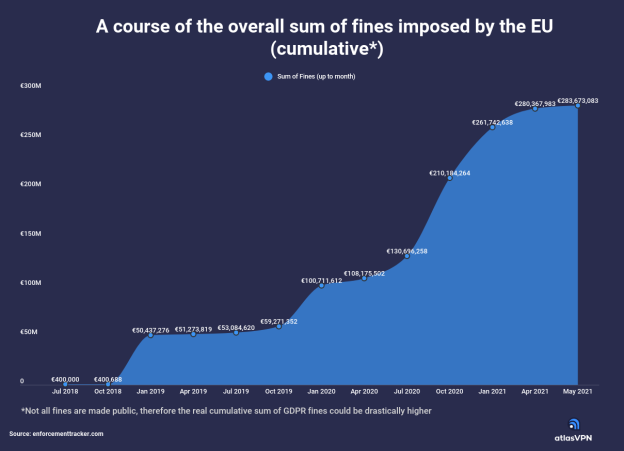
According to the recent Atlas VPN team findings, the cumulative sum of the GDPR fines imposed on the EU countries over the past three years has reached €283,673,083 due to a total of 648 penalties against organizations violating the data protection law.

The biggest GDPR fine so far was issued in January 2019. The French regulator CNIL fined Google €50 million for failing to provide transparent information on its consent policies and the way it handles ad personalization.

After that, another massive increase in penalties happened between October 2019 and January 2020. Thus, since the start of GDPR, organizations have been fined a total of €100,711,612 due to 167 violations.

In 2020, from July to October, there was a significant increase in the sum of fines. It was because 3 out of 5 most enormous penalties of all time were issued in October.

Cybersecurity writer and researcher at Atlas VPN William Sword, said: “GDPR has empowered EU citizens to be more actively involved in what is happening with their data and understand their privacy rights. As for organizations, complying with data protection rules will create a more trustworthy environment between them and consumers. ”

GDPR violations in specific countries

Privacy regulators in each country were closely monitoring companies to make sure that people’s data is dealt with responsibly.

Italy has assessed the most significant sum of fines over three years — €76,271,601. So far, Italy has been penalized a total of 77 times.

France takes second place with €54,661,300 in fines. The largest part of the amount was made off of the previously mentioned Google fine.

In third place sits Germany, where GDPR violations have cost companies €49,186,833.

Even though Spain has slightly less in the total sum of fines — €29,521,410, they have had the most violations. More than one-third of all GDPR penalties (230) were imposed upon Spain.

A people-first celebration – Register for ON Festival today!

ON Festival by Freshworks will host an exciting line-up of speakers who have pioneered the values that put people first in business. Coupled together with world-class entertainment, this event will leave you feeling energised, inspired and entertained.

Together with over 5,000 business leaders from across Europe, ON Festival will explore the role you and your organisation will play in embracing values such as happiness, empathy, well-being and the impact your organisation has in the local community. These values are now essential for building long-lasting customer and employee relationships.

Broadcasted live from London, Paris, Berlin and Amsterdam, this is your chance to switch ON positive values that put people first.

Join ON Festival online on June 24th, 2021 from 2 PM BST / 3 PM CET.

Over 3 hours starting at 2pm BST, we have an amazing lineup of speakers:-

· Girish Mathrubootham – CEO of Freshworks
· Tal Ben-Shahar – Top course of all times- Harvard University
· Marc Randolph – Co-Founder of Netflix
· Alex Dimiziani – Former Head of Global Comms AirBnB

Click Here To Register

Print & Digital Innovations Summit: Your one-stop shop for the latest innovations

Discover future trends and new solutions at the Print & Digital Innovations Summit, a unique event designed for senior professionals like you.

This is an invitation to attend as our guest on the 18th November at the Hilton London Canary Wharf.

Confirm your complimentary place and enjoy benefits such as;

  • Meet with budget-saving suppliers who match your requirements and upcoming projects
  • No hard sell and no time wasted – pre-scheduled 1-2-1 meetings are based on relevant interest
  • Attend insightful and educational seminars on future trends within the sector
  • Network with other senior print & marketing professionals
  • Complimentary lunch and refreshments throughout

Click here to secure your place, or contact me today for more information.

Social media solutions top marketer buying trends in 2021

Social Media Management and Lead Generation top the list of services the UK’s leading marketing professionals are sourcing in 2021.

The findings have been revealed by the Digital Marketing Solutions Summit and are based on delegate requirements at this month’s event.

Delegates registering to attend were asked which areas they needed to invest in during 2021 and beyond.

A significant 61% are looking to invest in Social Media, followed by Lead Generation & Tracking at 58% and Customer Engagement at 56%.

Just behind were Google Ads (50%) and Email Marketing (47%).

% of delegates at the Digital Marketing Solutions Summit sourcing certain products & solutions (Top 10):

Social Media 61%
Lead Generation & Tracking 58%
Customer Engagement 56%
Google Ads 50%
Email Marketing 47%
Engagement Marketing 47%
Online Strategy 44%
Search Engine Optimisation 50%
Strategy Marketing 44%
Multi-channel Engagement 42%

To find out more about the Digital Marketing Solutions Summit, visit https://digitalmarketingsolutionssummit.co.uk.

Age divide in marketing training creating ‘significant’ digital skills deficit

Marking Learning at Work Week 2021 (17-23 May), the Chartered Institute of Marketing (CIM) has revealed research which uncovers a significant age divide in the upskilling of UK marketing professionals.

CIM’s latest report ‘Digital Vision, living on the cutting edge’ found the majority of marketers over the age of 55 had received no training at all in the last two years, sparking concern that senior marketers may not be keeping up with the rapid digital pace of change in the sector.  

This comes after it emerged the number of unemployed people aged over 50 in the UK rose to 371,000 in 2020, a 33% rise compared to the previous year.

The COVID-19 pandemic has accelerated the shift towards digital, yet the CIM research reveals that as the pandemic hit, large swathes of marketers had not updated their skills for a number of years.

  • Training deficit – One in three marketers (35%) had not attended any internal or external training courses, events or conferences in the past two years.
  • Age divide – This lack of training and upskilling increases dramatically with age – 44% of 45-54 year olds, 62% of 55-64 year olds and 74% of those over 65. By contrast only 7% of those aged 16-24 had received no training.

Senior professionals overlooked for learning and development – Four in ten (41%) senior marketing professionals did not participate in training, a higher proportion than at all other levels of seniority. 

The low levels of training among older marketers are occurring despite an acknowledgement among 71% of marketers that young people are ahead of older generations in digital marketing skills.

Meanwhile nearly half of professionals (44%) say marketers who don’t have formal training could pose a risk to their organisations.

In some critical areas, such as data and analytics, social media and Search Engine Optimisation (SEO), it is clear junior staff have focused on their development, improving their digital skills to address key customer requirements or to further their careers.

The specialists have become more expert, improving their knowledge but not breadth of digital skills, whilst managers and heads have spread their skills and, in some cases, fallen back.

The report is the latest in CIM’s Impact of Marketing series which surveyed more than 1,200 marketers, from across both private and public sectors. The report finds widespread concern about the dramatic changes in the skills required of modern marketing professionals:

  • Rapid change – Six in ten marketers (63%) say the pace of change in marketing is greater than ever.
  • A completely different skill set – Six in ten marketers (62%) agree that the marketing skill set has completely changed over the past ten years. Only 9% disagree.
  • Struggling to keep up – Almost half of marketers (44%) say that they find it difficult to keep up with the changing demands of marketing.

Chris Daly, chief executive of the Chartered Institute of Marketing said: “The marketing sector has been through a huge transition in the past few years; adapting to new rules on data protection; evolving to incorporate an array of new digital channels; and responding to changing social attitudes. 

“It is worrying that so many of our peers, especially senior level marketers, have undertaken no training to help them adapt to these changes. We can understand why they might be prioritising the training of less experienced members of their team and feel they don’t have the time to fit training in, but keeping up to date in this fast paced industry should be a priority, especially when accessing learning and development is easier than it’s ever been. 

“In a sector that has faced such dramatic change in recent years, marketers who fail to upskill may be putting both their careers and their organisational growth at risk.” 

60% believed that a complete focus on digital skills can come at the expense of core marketing skills. This is felt significantly more keenly amongst 25-44 year olds. With content development at the heart of marketing it was surprising to see 59% felt good copywriting wasn’t common in the sector. Data analysis was also seen to be in decline with only 61% perceiving it as a common skills gap.

Mi Rewards loyalty programme approaches £1million milestone

A next generation town and city loyalty programme has introduced a new website and tools for businesses ahead of a key milestone for the scheme.

Mi Rewards, the town and city loyalty programme from Scottish fintech Miconex and loyalty platform Stampfeet, is approaching £1million in sales, with over 47,000 transactions.

The loyalty programme expanded across the UK in 2020 with launches in Enniskillen, Stoke-on-Trent City Centre, Guildford, Gloucester and Fleet. New schemes will launch in Barnsley and Kirkcaldy in 2021.

Originating in Perth in 2018, Mi Rewards is a payment card linked loyalty scheme with customers receiving rewards when they use linked debit or credit cards in participating local businesses in their town or city. Once cards are linked, the technology runs in the background and users don’t have to show a separate loyalty card.

A revamped website was introduced in May 2021 to provide support for new and existing Mi Rewards locations as businesses reopen following the latest lockdown. The new website features a greater focus on participating businesses, including a promotions page for the business to improve visibility and traction with potential customers.

In Kirkcaldy, Mi Rewards will also work alongside their Kirkcaldy Gift Card. Customers can link their Kirkcaldy Gift Card and get points when they spend it in participating retailers. Hazel Cross, is the Town Centre Development Officer at Fife Council:

“We launched Mi Rewards Kirkcaldy not only to encourage customers to the town centre but to reward their loyalty as they continue to love and support local businesses.   It’s a great, no hassle, rewards programme. Every pound spent at participating businesses turns into a digital reward point and with every 10 Kirkcaldy points collected over the month, you’re entered into a monthly town centre prize draw. 

“Kirkcaldy town centre has a great mix of independent businesses with everything from dinner to diamonds, carpets to coffee and spa days to sport, alongside a fantastic waterfront and weekly artisan market.  Everyone is encouraged to continue to support and love Kirkcaldy and Kirkcaldy will continue to reward you, not only with fantastic goods, services, experiences but now with Kirkcaldy reward points too.”

Barnsley is introducing Mi Rewards as part of its coronavirus recovery work. Chris Savage, project manager in the markets and town centre services team at Barnsley Council, said:

“Alongside the Barnsley Gift Card, Mi Rewards is part of Barnsley Council’s work to support businesses to recover from the Covid-19 pandemic. The programme is a great way to support the local economy in Barnsley, rewarding shoppers for spending with local businesses. We’re at the early stage of engaging with businesses to get them on board and will soon be announcing details of the monthly prizes. If you’re a business in Barnsley reading this, please contact us on towncentre@barnsley.gov.uk to find out how you can get involved.”

Gloucester is relaunching its Mi Rewards scheme following the latest lockdown. BID Manager Emily Gibbon from Gloucester BID said the initiative is vital to the re-opening of the high street:

“We have around 60 businesses on board across all sectors including retail, and food and drink. It’s useful for businesses because they can see who their customers are, who is shopping with them and where they are from, they can also reach out and gain new customers. Mi Rewards has a role in the re-opening of the high street, particularly as we approach step 3 in the road map.

“It’s important that businesses realise that they are not alone. They’ve probably tried various loyalty schemes in the past but this is next generation loyalty. We’re helping businesses to see the potential for Mi Rewards as a customer engagement platform, enabling cross pollination and businesses supporting businesses from one side of the city to the other and aligning with our motto- together we can achieve more.

“Anything new requires a change in behaviour and that takes time but customers are starting to realise the benefits of being a part of Mi Rewards, like exclusive offers and discounts. They get 1 entry into our prize draw for every £10 spent; the April prize was a £100 Gloucester Gift Card and the May prize is two £50 Gloucester Gift Cards, but we’re also looking into hampers, bundles and more.”

The Mi Rewards scheme moved to a points based rewards process in 2020 giving even low volume users the opportunity to win a prize, with chances to win increasing alongside usage. Colin Munro is the managing director of Miconex, which also operates over 60 Town and City Gift Card programmes in the UK and Ireland, including in Enniskillen, Kirkcaldy, Barnsley and Gloucester.

“The vision with Mi Rewards was for a more efficient solution to the loyalty problem that businesses face. Traditional loyalty schemes have tried and failed. Mi Rewards is a next generation loyalty solution that approaches loyalty at a place level, bringing businesses together in a coalition, in a way that is beneficial to the business, the customer and the town or city.

“Places and businesses can use the data they receive to better understand their customers, measuring and identifying what works and what doesn’t, and rewarding local spend. Mi Rewards offers zero friction, positive user experience and huge potential for solving the conundrum of high street loyalty.”

Asaf Rozin is the CEO of London and Maryland based loyalty platform Stampfeet, and said one of the main benefits of Mi Rewards is the removal of issues with traditional loyalty programmes:

“With a traditional loyalty card programme, there is the constant struggle to get the data coming in. You can only get the data when customers present their loyalty card. With Mi Rewards, there is a one-off action on the customer’s behalf to link their payment cards. There is no need to train staff, and the business receives data as long as the payment card keeps being used; the customer can link as many cards as they like.

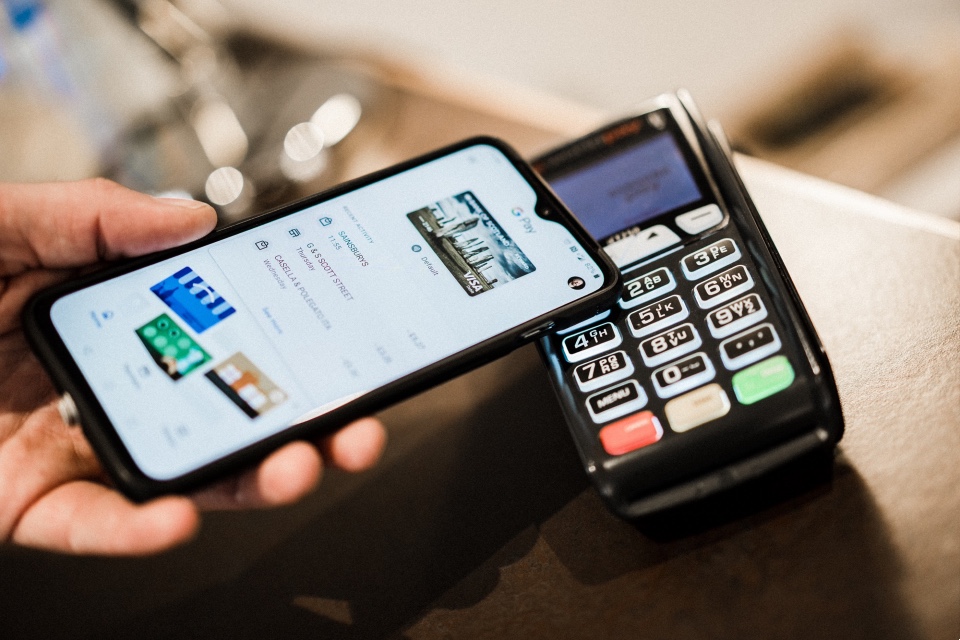
“Mi Rewards works on a token system. A customer links a card, say a Visa, and we receive a token. Every time there is a transaction, the Visa ID is matched to the token and the customer is rewarded. We don’t hold or store a customer’s card details. Both Apple Pay and Google Pay work in the same way.

“It is anticipated that Mi Rewards functionality will develop over time to allow businesses to offer their own prizes, keeping their own nature as a small business but within a platform of users in their area who are their potential customers. This will enhance business profitability and efficiency. Coalition loyalty has huge potential, particularly around mutual and partner offers, for example with a free coffee after you’ve had your haircut. Through coalition loyalty, we can drive spend in local high streets.”

Find the solutions you need at the eTailing Summit

There’s a free guest pass waiting for you at the hybrid eTailing Summit. Can you join us?

7th July – Hilton London Canary Wharf (virtual attendance options are also available)

This unique event is entirely complimentary for you to attend – simply reserve your place here.

  • Receive a bespoke itinerary of 1-2-1 meetings with suppliers that meet your requirements
  • Attend inspirational seminar sessions from industry thought-leaders
  • Network with like-minded peers
  • Complimentary lunch and refreshments included 

If you have any questions, please get in touch!

Do you specialise in Brand Monitoring? We want to hear from you!

Each month on Digital Marketing Briefing we’re shining the spotlight on different parts of the print and marketing sectors – and in June we’ll be focussing on Brand Monitoring services.

It’s all part of our ‘Recommended’ editorial feature, designed to help marketing industry professionals find the best products and services available today.

So, if you specialise in Brand Monitoring solutions and would like to be included as part of this exciting new shop window, we’d love to hear from you – for more info, contact Clair Wyld on c.wyld@forumevents.co.uk.

Here are the areas we’ll be covering, month by month:

Jun – Brand Monitoring
Jul -Web Analytics
Aug -Conversion Rate Optimisation
Sep -Digital Signage
Oct -Brochure Printing
Nov – Creative & Design
Dec – Online Strategy

Consumers in emerging markets more open to sharing data

Countries like China, Brazil and South Africa are much more open to sharing their personal data with companies than consumers in Western countries, like the UK, France and the US, according to new research from emlyon business school.

The findings come from a global study of over 22,000 online shoppers, which looked into their willingness to share their personal information, like identification and financial data, with companies when purchasing products.

The researchers; Monica Grosso, Associate Professor of Marketing at emlyon, alongside colleagues from Bocconi School of Management, KU Leuven, CEFAM International School of Business and Management and the Center for Service Intelligence, wanted to understand what factors had an impact on the willingness of consumers to share personal data with companies.

The factors they reviewed were: whether the type of product had an impact, whether the country consumers were from had an impact, and whether and how customers could be incentivised to provide further data even if they weren’t willing to in the first place.

Through the survey, the researchers gathered data on over 22,000 shoppers, who were buying products from seven different categories; identification, medical, financial, locational, demographic, lifestyle, and media usage data.

The research also focused on the privacy concerns and willingness of participants in fourteen different countries, ranging from highly individualistic, such as the UK, France, the United States, Canada and Australia, to collectivist nations, including China, Brazil and South Africa.

The researchers also reviewed whether customers were more likely to share their personal data and information if there was some form of compensation for doing so.

Professor Grosso said: “Given sharing personal data online is often on a voluntary basis, it is difficult for companies to persuade customer’s to do so. Not only this, but in the wake of high-profile privacy scandals, customers have become increasingly worried about how organizations store and exploit their personal data. Consumers have therefore become more cautious about sharing such data with retail companies. Therefore understanding the market, and having a full-proof strategy to maximise data sharing of customers is vital for marketing departments”.

The researchers also found that once offered compensation and incentives for sharing their personal data, consumers in all contexts were more likely to provide their data to companies. This compensation and incentives included a tangible benefit for the customers, such as discount coupons or small free gifts, showing that there are clear, effective methods for companies to use to garner more data from their consumers.

Grosso added: “Companies are always keen to secure as much data as they can from their customers in order to inform increase future sales tailor marketing efforts to their needs, and boost customer brand loyalty, but often customers are reluctant and unwilling to provide such data. These results show trust can differ across contexts, and customers can be further encouraged to provide personal data through a number of tailored methods.”

For companies, the research shows that the willingness of consumers to share varies greatly over different countries. Therefore, if companies are looking to collect vital data from their customers in different country contexts, they should adopt different privacy strategies based on the information type, country, and product category.

Status of luxury brands ‘being ruined’ by customisation

As the fashion industry continues to give customers a more active role in designing their own products, luxury brands must be careful not to take customization too far, according to new research from Vienna University of Economics and Business (WU Vienna).

Many brands make it possible for customers to make their own design choices when it comes to selecting colors, fabrics, and cuts. But does this approach also work for luxury brands? Headed by Martin Schreier and Silke Hieke, researchers from WU Vienna’s Institute for Marketing Management set out to answer to answer this question, finding that, for luxury brands, there is such a thing as too much choice.

With new manufacturing processes opening up greater possibilities when it comes to customization, consumers now place a greater value on customized than on standard products.

However, while existing marketing research has shown that consumers like customized products because these unique products communicate their identity more effectively. This is only true for mainstream brands.

The WU Vienna researchers carried out a series of studies, showing that while luxury brands can indeed benefit from customization, there is also the risk of going too far. Particularly fashion-conscious customers – the primary consumer base of luxury brands – place great importance on their appearance and are more sensitive to prestige. Its because of this that these customers are highly aware of the signal value associated with luxury brands.

Customers pay a premium for the designer’s expertise and the status luxury brands convey. This means that the brand must remain clearly recognizable. If customization is taken too far, the consumers’ desire for self-expression can potentially erode the product’s signaling value.

“It pieces” like the Hermès Birkin bag have a special value because they are exclusive and they convey a clear brand identity.

According to the researchers, luxury brands can protect their ability to convey status by making the brand more prominent through overt means, for example through the obvious display of brand logos.

By assuring luxury consumers that others can receive the status signal that they are sending, these brands are able to give their consumers greater freedom for customization decisions.  In general, however, luxury brands should leave only a few design decisions to their customers to protect the signal value created by the brands and their designers.

The study has been published in the Journal of Marketing Research.