Digital Marketing Solutions Summit | Forum Events Digital Marketing Solutions Summit | Forum Events Digital Marketing Solutions Summit | Forum Events Digital Marketing Solutions Summit | Forum Events Digital Marketing Solutions Summit | Forum Events

All

Join the UK’s leading brands at the eCommerce Forum next month!

Would you like to join the likes of  John Lewis, Berghaus, Ryanair and Lego at the eCommerce Forum? We only have two delegate placed left, so register today!

4th July – Hilton London Canary Wharf

RSVP Today!

Your attendance will allow you to enjoy a day of 1-2-1 meetings with innovative suppliers and industry seminar sessions. You’ll also enjoy lunch provided by us and refreshments during the coffee breaks.

Plus, you’ll have the opportunity to network with your peers – those delegates confirmed to attend include:

NEOM Organics London
London Grow Ltd
Whitbread PLC
WKNDGIRL.com
Hellofresh
Lego
Ryanair
Futon Company
Vollebak
Heathrow Airport
Iconic Luxury Hotels
The Wolfe London
Lights4fun
1855 The Bottle Shop Ltd
AB World Foods Ltd
John Lewis
Berghaus
Samurai Sportswear
Harvey Nichols
Biotiful Gut Health
Rat & Boa
Mimi Holliday
Sally Salon Services
Futon Company

Secure one of our last remaining places today, or let us know if you’d like more information.

Retailers ‘must hyper-personalise’ to survive

Only 34% of IT decision-makers at UK retailers are “very confident” that their organisation will be able to keep in touch with customer concerns and anxieties in the cost-of-living crisis.

This is according to research from Ensono, which says retailers expect to lose an average of almost one-third (29%) of their customer base as the cost-of-living crisis continues.

The research, which surveyed 500 senior IT decision makers working in UK retail, revealed retailers feeling the strain of rising prices and the worsening cost-of-living crisis.

It found department store brands expect to lose an average of 32% of customers – the largest drop across the different areas of retail surveyed, highlighting the need for innovative solutions to retain existing customers.

The most pressure is on the smallest retailers, with tech decision-makers at retailers with just 1-9 employees expecting to lose 36% of their customers. This compares to 27% at retailers with more than 500 employees.

Customer connection is front of mind for UK retailers in navigating the difficult economic climate. Confidence, however, is muted across the industry. Only 34% respondents are “very confident” that their organisation will be able to keep in touch with customer concerns and anxieties during the cost-of-living crisis, with 48% “somewhat confident” and 17% ‘not very confident/not confident at all’.

Higher revenue is no guarantee of confidence in connecting with customers. Retailers with a revenue of £500 million – £999.99 million were in fact more confident (73%) than retailers with revenue of £2 billion-£2.9 billion (69%).  Retailers in essential services like grocers (89%) and fashion (88%) are more confident about staying connected with customers than their counterparts in the luxury space like entertainment (71%) or health & beauty (74%).

The research makes clear that retailers are committed to finding new ways to innovate and modernise the services they offer to customers. Sixty-three percent of IT decision-makers have increased tech investment as a result of rapidly changing consumer behaviour. Leaders are focused on several areas of technology to spur growth in 2023:

  1. Behavioural and product analytics (39%)
  2. Monitoring and performance tools (36%)
  3. Cloud Infrastructure (36%)

Retailers are prepared to move quickly on this investment. More than three-quarters (76%) of retailers said they prioritise first-mover advantage on tech investment to avoid being left behind by competitors. This focus on first-mover advantage was particularly strong in Grocery (91%), Sports & Leisure (86%), and Fashion (85%).

This conviction is backed up by clear alignment with the rest of the business: 79% of respondents agreed they have a voice in shaping the strategic direction of the business.

Steven Jones, Consulting Director at Ensono, said: “Retailers are facing a challenging 2023. It’s clear that many in the industry are bracing for severe customer losses as the cost-of-living crisis continues to bite for UK retailers.

“Survival will require retailers to be agile, taking swift action to preserve and make the most of the customers they have. Technology investment by retailers needs to be strategic and targeted. High-impact tools like data analytics help retailers build a more comprehensive picture of customer behaviour, staying connected with customer needs and priorities, and enabling them to deliver a hyper-personalised, memorable experience every step of the way.”

‘Catalytic marketing’ will allow CMOs to drive profitable growth

Catalytic marketing experiences provide the greatest boost to commercially productive behaviours such as paying a premium or referring other customers to the brand.

That’s according to analysts at Gartner, who categorise catalytic marketing experiences as those that change customers’ understanding of their own needs and make them feel more confident moving in a new direction.

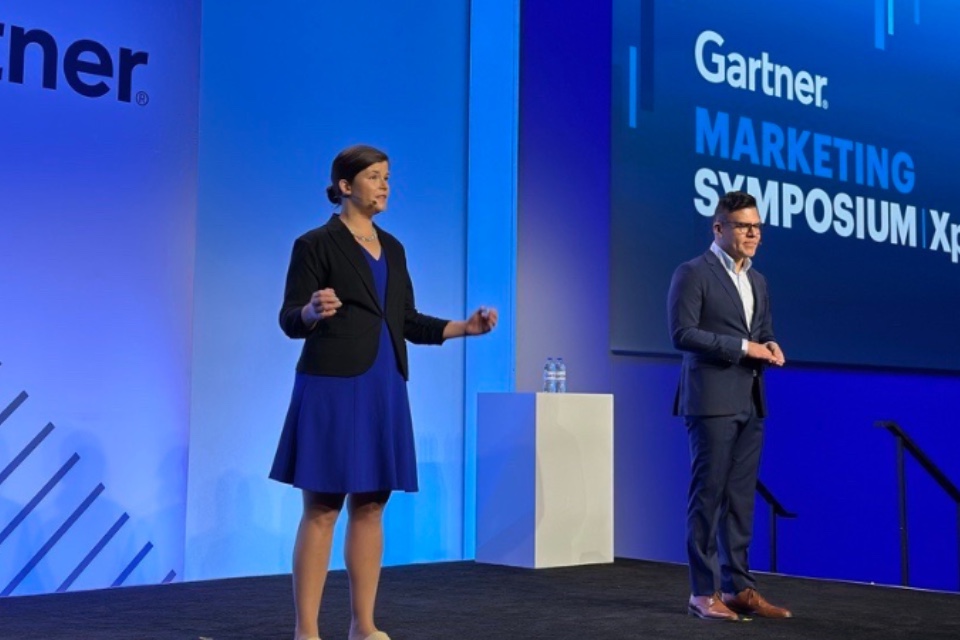
During the opening keynote of the Gartner Marketing Symposium/Xpo, Gartner experts explored how catalytic marketing can help alleviate the pressures CMOs are under to deliver profitable, digital growth amid disruption.

“In a pressurized environment, CMOs are eager to optimize their investments and justify their existence,” said Carlos Guerrero, VP, Advisory in the Gartner Marketing Practice. “Yet they overcompensate in their customer-focused activities, continuously investing in more channels, technology, customer data and personalization.

“The singular focus on customers results in a series of escalating and unprofitable investments in experiences that customers find invasive and tune out. To spark productive, lasting changes in organizations and audiences requires catalytic marketing.”

Catalytic experiences help marketers do less to get more: They don’t require additional integrated data, engagement across channels, nor more technology or a fully optimized engine for journey orchestration – all of which caters to CMOs’ budget and resource constraints.

Instead, they require one meaningful opportunity that prompts customers to stop and think, change their perspective on something they knew well, or teach them something entirely new about the brand.

Gartner research shows that a single catalytic digital experience doubles the likelihood of commercially productive behaviors. It matters even more than having a large number of memorable brand interactions and rating all of them as high-value.

For example, one cosmetics company provided customers with an AI-powered assessment of their unique skincare needs, simulating an in-person beauty advisor. Customers could reflect on and explore skin improvement goals based on an honest appraisal of their skin’s features compared to other people their age.

“The cosmetic brand went beyond being just another product recommender by supporting customers’ own self-assessment of their skin prior to being routed to any product recommendation,” said Lizzy Foo Kune, VP Analyst in the Gartner Marketing Practice. “Ultimately, the catalytic experience it provided deliberately elicited a moment of self-reflection that gave customers the confidence to commit to a new skin care regimen, providing lasting change in their target audience.”

The Three C’s of Catalytic CMOs: Clarity, Connections and Courage

Catalytic marketing must be supported by a distinct management orientation that allows CMOs to create and deploy these experiences at scale.

Catalytic marketing leaders demonstrate and cultivate unusual levels of:

  • Clarity (of strategy) – They willingly articulate a limited set of core objectives and brand traits, and exercise discipline in pursuing a small number of strategically important activities.
  • Connections (of capabilities) – They prioritize capabilities and management techniques that enable coordinated, adaptive use of resources, including converged channel management and cross-channel customer experiences.
  • Courage (of convictions) – They defend choices to constrain remits, push back on urgent but unimportant requests, and opt to pare or devolve ownership of non-core tasks or investments.

“Progressive CMOs are breaking free from the cycle of more by embracing catalytic marketing and, in the process, shifting from growing marketing’s scope to growing marketing’s success as an efficient growth engine for the enterprise,” concluded Guerrero.

66% of marketers ‘lack confidence’ in ability to achieve revenue goals

Research has highlighted the importance of data/analytics for marketers working to protect budgets and prove ROI in 2023.

A study conducted by Sprinklr and the CMO Council, Outsmart Adversity: Weathering Economic Headwinds and Emerging Poised for Growth, found that 2 in 3 marketing leaders lack confidence in their ability to achieve goals in the face of economic adversity and uncertainty.

Nearly 8 in 10 express concerns around lack of investment or budget cuts. Challenges with executing data-driven marketing strategies contribute to this lack of confidence.  

The report surveyed nearly 500 global marketing leaders to reveal key findings about how marketers feel about economic adversity, and how they can achieve revenue goals.  

Key findings include:  

  • 78% of marketers don’t strongly feel that they can convince the CFO to invest in marketing and not cut the budget. 
  • Facing budget challenges, a majority (68%) strongly agree that it’s imperative for CMOs and CIOs to collaborate this year to develop a competitive advantage with customer experience.  
  • However, even among highly confident marketers surveyed, only 32% are very satisfied in their ability to leverage data/analytics. Among less confident marketers, this falls to 10%. 
  • Internal collaboration and maximising ROI across marketing channels will be key to success. In the next 12 months, most marketers plan to create omnichannel customer experiences to help them emerge from economic uncertainty.  

“Marketers will have to build alliances with finance and IT to protect budgets and MarTech investments, and they’ll need to identify and shore up capabilities to build their confidence,” said Donovan Neale-May, executive director of the CMO Council. “These capabilities include gathering real-time insights that reveal how audiences really feel about your marketing on multiple channels, and then easily distributing this knowledge throughout the organisation.”

“In uncertain times, marketers face even more pressure to protect budgets and programs by demonstrating clear ROI,” said Arun Pattabhiraman, Chief MarketingOfficer, Sprinklr. “As our research with the CMO Council shows, marketers must embrace the opportunity to enhance the way they gather data, identify actionable consumer insights, and strengthen their engagement strategy across channels.”

Do you specialise in Brand Monitoring solutions? We want to hear from you!

Each month on Digital Marketing Briefing we’re shining the spotlight on different parts of the print and marketing sectors – and in June we’ll be focussing on Brand Monitoring solutions.

It’s all part of our ‘Recommended’ editorial feature, designed to help marketing industry professionals find the best products and services available today.

So, if you specialise in Brand Monitoring and would like to be included as part of this exciting new shop window, we’d love to hear from you – for more info, contact Kerry Naumburger on k.naumburger@forumevents.co.uk.

Jun – Brand Monitoring
July – Web Analytics
Aug – Conversion Rate Optimisation
Sept – Digital Signage
Oct – Brochure Printing
Nov – Creative & Design
Dec – Online Strategy
Jan 2024 – Content Management
Feb 2024 – Lead Generation & Tracking
Mar 2024 – Email Marketing
April 2024 – Digital Printing
May 2024 – Social Media

Top ten PR and marketing tactics to help retain e-commerce customers

In 2022, the UK was expected to have almost 60 million e-commerce users — leaving only a minority of the population as non-digital buyers. As such, e-commerce has undeniably become the norm for shoppers everywhere in the UK, resulting in an increasingly competitive environment.

With this in mind, and following a 7,900% increase in monthly searches for “customer retention” over the last three years, PR and communications specialists Wild PR, has shared ten ways e-commerce business owners can build excellent customer relations and retain existing customers to maximise return sales and up-sells…

Define your target client personas

In order to retain customers, you need to ensure your strategy is formed on attracting the right people and getting a comprehensive understanding of their needs, goals and objectives.

Clarify your perfect target audience and personas by researching the current industry landscape and competitor profiles, as well as listening to your current customers so you can define your tone of voice to best engage with them. This will allow you to appeal to the right clients for your business.

Embed your brand purpose

When choosing brands to do business with, today’s consumers are more interested in the impact that brands have on the world than just what products or services they offer. To take your brand to the next level, you need a mission statement that resonates with your audience.

Brand purpose is essential because it shows customers that you’re more than just a product, service or advertising campaign; you have a larger goal, and it’s not just about making a profit.

Make customers feel appreciated and valued

This is often as simple as saying thank you. Express your thanks with a special written note or a coupon for their next visit in their delivery or via their order confirmation. This is a way to remind them again that they made the right decision in doing business with you.

Go the extra mile

Why not send a Happy Birthday or customer anniversary offer as a show of appreciation for your customer’s loyalty?

Maximise the use of data from your CRM to identify the best possible times to interact with your customers. Whether it’s their birthday, their anniversary of becoming a customer with you, their pet’s birthday or perhaps their wedding anniversary, there are multiple opportunities to show your customer how much you appreciate them.

This may be an email with a discount for their order, or you could send them an unexpected sample gift in the post with an offer code allowing for potential appreciation posts on their social media platforms, which could, in turn, generate customer referrals. Win-win!

Ask for feedback

How can you improve your customer service if you don’t ask them what they think? Surveys and other means of gathering feedback can help you to learn what your customers enjoy and where improvements can be made.

You can even incentivise this by providing a discount code for everyone who completes the survey as a token of thanks, which could result in increased orders.

Value honesty and integrity

As a business, it is crucial always to have a culture of honesty and integrity. Refrain from blaming the customer if something goes wrong with your product or if something is missing from an order and you still need to meet the customer’s expectations.

While the issues might be out of your hands, or it might indeed be the customer’s fault, find a way to fix the issue as quickly as possible and promptly respond to complaints politely and professionally.

If communication is being undertaken on social media pages, look for a way to take the communication privately to minimise the chances of the post showing in potential customer feeds.

Engage in two-way communication with customers

Two-way communication between brands and consumers is beneficial for both parties. Social media platforms, in particular, have made it easy for companies to connect with their customers so they no longer feel like strangers.

Make sure to respond to consumer feedback or questions, as failing to do so can create a sense of distrust, or potential customers could view you as being inactive and, as such, risk the loss of orders.

Building a community online

As part of the buyer journey, consumers are often primarily looking to learn more about a company’s products or services before making their purchase decision.

By building a strong online community that aligns with your business, you can strengthen brand loyalty and attract new customers. Companies can easily achieve this by providing educational content for customers through newsletters, forums, videos, blog posts, and even whitepapers.

Digital PR and Traditional PR

Customers who see a company being talked about in positive news stories are more likely to feel secure about their buying decisions when purchasing from the business.

Traditional PR, such as company announcements, product launches, thought leadership or commentary on relevant topics, can boost credibility when it comes to retaining and attracting clients.

While Digital PR can help drive referral traffic through an element of link building, helping your site rank higher in search engine results pages (SERPs). This tactic helps get you in front of new customers, reminds lapsed customers about your brand, and makes loyal customers advocate for your brand. All tactics that help increase sales.

Hire a PR agency to manage communications

Hiring a PR agency can help brands stay ahead of the curve and reach a much wider audience.

Usually, the agency would work alongside internal marketing teams or directly with CEOs and business owners to promote an e-commerce brand’s products and services while positioning them as the best option in the market.

Revealed: The solutions marketers need in 2023

Lead Generation & Tracking, Customer Engagement and Social Media top the list of solutions the UK’s leading marketing professionals are sourcing in 2023.

The data has been revealed by the Digital Marketing Solutions Summit, based on delegate requirements for this week’s event.

Delegates registering to attend were asked which areas they needed to invest in during 2023 and beyond.

The Top 5 is rounded out by Marketing Strategy and Multichannel.

The most in-demand services has changed markedly since May last year, when Lead Generation Pay Per Click and Google Ads topped the list.

% of delegates at the Digital Marketing Solutions Summit sourcing certain products & solutions (Top 10):

  • Lead Generation & Tracking
  • Customer Engagement
  • Social Media
  • Marketing Strategy
  • Multichannel
  • Data Management
  • Email Marketing
  • Pay Per Click
  • AI
  • Google Ads

To find out more about the Digital Marketing Solutions Summit, visit https://digitalmarketingsolutionssummit.co.uk.

Local language support essential for online sales success

When it comes to buying from brands online, over four in five consumers won’t buy from a brand that doesn’t offer local language support

That’s according to a new report released by RWS, which asked 6,500 global consumers about their online habits and how they like to engage with online businesses.

RWS’s Unlocking Global Understanding research found that 62% of global consumers see the internet as very important when undertaking daily activities, with a third of people admitting they cannot live without the internet (35%) – rising to two-thirds in Japan. As a consequence, 20% of consumers spend over 10 hours a day online.

Yet when it comes to dealing with online companies, the provision of local language services can have a drastic impact on the user experience and the level of trust that consumers hold in different brands.

The vast majority of global consumers (89%) believe they should have the option of dealing with a company online in their preferred language, with half of those surveyed feeling strongly about this (49%). Despite this, 44% of consumers voiced their frustrations at the fact that the English language dominates the internet and consumer technology.

If brands want to access a global audience, 93% of consumers agree that these companies need to communicate with them in their preferred languages through all channels at all times. At a national level, 60% of Kenyans, 57% of Indians and 55% of Brazilians feel particularly strongly on this point. What’s more, although 77% trust businesses with a local presence, 58% agree that a localized online presence matches a physical presence in terms of trust.

Maria Schnell, Chief Language Officer at RWS, said: “It’s no surprise that consumers around the globe rely heavily on the internet for daily activities. Yet this dependency is being undermined by the fact that not all consumers are able to engage with companies in their preferred language. This can pose significant problems and foster feelings of alienation as consumers are forced to communicate in a foreign language. It also demonstrates a knowledge and cultural gap when it comes to marketing, advertising and customer services.

“The internet has the potential to truly empower people from local communities. However, this can only occur if companies are willing to recognize and appreciate local cultures, giving their consumers the opportunity to communicate in their own language. Doing so will open brands up to new market opportunities; if avoided, they run the real risk of alienating themselves from non-English speaking consumer markets.”

The eCommerce Forum could unlock your KPIs in 2023

The eCommerce Forum takes place in six week’s time – can you afford not to be there?

Tuesday 4th July

Hilton London Canary Wharf

We would be thrilled if you or a colleague could join us for the day or for whatever your schedule allows.

Simply click here to secure your free pass to the Forum, where you can meet 1-2-1 with budget-saving suppliers, a series of seminar sessions, a complimentary buffet lunch & refreshments during the networking breaks.

For more information, please don’t hesitate to get in touch.

UK digital ad spend up 11% to £26.1bn in 2022

The UK digital ad market maintained double digit growth of 11% in 2022, despite a challenging year as advertisers navigated the cost-of-living crisis, political uncertainty, and the impact of structural changes such as the removal of Identifier for Advertisers (IDFA).

The IAB’s latest Digital Adspend report, produced with PwC, shows that digital advertising spend stands at £26.1bn – a 56% overall increase since the pandemic began in 2020.

Key findings include:

  • Search continued to maintain market dominance with spend up 13% year-on-year to £13.1bn. Meanwhile, display investment grew by 6% to £10.4bn, with growth in this area fuelled by standard display ads (+ 14%). Video spend grew by 9%, largely driven by investment in outstream formats
  • Reflecting the growing diversity within the online ecosystem, Digital Adspend 2022 includes an official sizing of the UK’s digital retail media market for the first time, with spend standing at £176.4m. This figure relates to UK-based retailers and specifically charts onsite spend. Our forecast analysis indicates that spend in this area will continue to grow in 2023, becoming a key driver of digital’s overall market growth as advertisers increasingly harness retailers’ first-party data
  • In another first, the rate of growth in desktop spend (+ 14%) outstripped mobile (+ 8%) for the first time since records began, a development that coincides with Apple’s IDFA changes in-app and shows how structural changes are shaping the market. However, mobile still has the largest share of the market at 58%
  • Elsewhere, podcast spend grew by 32% to £76.3m, which is more than a three-fold increase since IAB UK first started measuring the market in 2020. Another area of strong growth was in a category that includes wearable devices and in-car advertising, indicating how advertiser spend is embracing the opportunities posed by new technology

Jon Mew, CEO at IAB UK, said: “The latest Digital Adspend results highlight two things: resilience and opportunity. Not only was 2022 challenging for our industry, as it was for the entire UK economy, it also followed a year of stratospheric, pandemic-induced growth in 2021. In this context, it’s testament to the resilience of digital advertising that the market has maintained double digit growth in 2022 – and astounding that it has grown by 56% since the pandemic began.

“Today’s results also reflect the growing opportunities for advertisers to resonate with audiences in new ways. Of course, search and display spend still underpin the digital ecosystem, but the UK’s flourishing retail media market – officially sized for the first time in this report – alongside the continued growth of podcasting, show how digital is diversifying to offer advertisers more choice and more immersive routes to connect with consumers.”

Hannah Biernat, Senior Manager, PwC, added: “This year’s Adspend results reflect a stabilisation of the market growth in line with pre-pandemic levels, demonstrating the robustness of the industry and its ability to weather wider spread economic and political uncertainties. Clients appear to be embracing connecting with audiences in emerging formats as demonstrated by the growth in podcast investment and formats across connected devices. It will be exciting to see how the industry continues to innovate and diversify in formats and channels in the coming year.”

Simon Lonsdale, Strategy Director, Tesco Media and Insight Platform powered by dunnhumby, commented: “It’s hugely significant that digital retail media is in the IAB’s 2022 Digital Adspend report for the first time. While various forecasts and estimates have been published over the past few months, this is the first official cross-market spend figure for the UK-based market, which reflects the growing importance of retail media to advertisers.

“Our priority is to evolve and grow our retail media business to allow advertisers to reach the customers that matter most to them at scale. We look forward to working closely with the IAB to pioneer the frameworks that are essential to underpin long-term growth and allow retail media to reach its full potential.”