Digital Marketing Solutions Summit | Forum Events Digital Marketing Solutions Summit | Forum Events Digital Marketing Solutions Summit | Forum Events Digital Marketing Solutions Summit | Forum Events Digital Marketing Solutions Summit | Forum Events

All

Claim your place at next year’s Digital Marketing Solutions Summit

Are you able to attend the next Digital Marketing Solutions Summit? Live or virtual delegate options are available, so either way we’ve got you covered! 

13th May 2021 – Hilton London Canary Wharf

This unique Summit is hybrid, which allows you to attend either in-person at the live event or via our virtual platform – whichever suits you the best!

Your place is entirely complimentary and includes;

  • A personalised itinerary of relaxed 1-2-1 meetings with budget-saving suppliers who match your needs for upcoming projects
  • Access to a live insightful seminar session led by an industry thought leader
  • A wealth of pre-recorded webinars
  • Lunch and refreshments throughout*
  • Networking with fellow industry professionals*

It is completely flexible – you can attend for the whole duration of the event or for just half a day. 

Secure your virtual OR live event pass HERE.

WEBINAR: How to ensure you website & digital comms are legal and compliant

By Texthelp

September 23, 2020 was the final deadline for digital accessibility legislation. So it’s more important than ever that you ensure your website is compliant and inclusive.

Access an on demand webinar with Daniel McLaughlan, Accessibility and Usability Consultant, Sarah Richards, creator of GOV.UK website content strategy, and Donna Thomson, Marketing Manager at Texthelp for easy, practical advice on creating accessible digital content.

Register to access the presentation, slides and a suite of checklists and guides. Join us if you are a digital marketing professional, keen to improve compliance, digital communications and build more inclusive marketing and digital experiences.

Typical online purchases involve seven steps taking three hours

Shoppers work through several stages before making a significant buy via the internet, which includes spending at least 35 minutes deciding whether a purchase is absolutely necessary.

Following that, an online search for a product or service, including on social media sites, will take place over the next 33 minutes.

And the survey of 2,000 adults found an average of 30 minutes is then spent reading online reviews and recommendations, with the average shopper avoiding a purchase if something has less than 3.4 stars out of five.

While one in 10 wouldn’t buy something with 99 five-star ratings if it has just a single one-star review.

Half an hour will also be spent narrowing down the choices between brands by comparing to other similar products for price and quality.

Other steps include sharing potential purchases with friends or family, putting something into a virtual basket – then the final hurdle of completing the transaction.

The research was commissioned by Vision Direct, whose CMO, Ashley Mealor, said: “As purchasers are spending so long scouring reviews, it is so important for businesses, especially those operating online, to be accurately and fairly represented.

“We recognise there are some brands which have reviews that cannot be trusted, as those writing them have been incentivised to do so.

“Implemented for the main purpose of generating favourable online appraisals, the concept of proposing incentives or hosting competitions can be misleading and skew authenticity.

“It’s encouraging to see platforms such as Trustpilot, starting to take great steps to ensure it is a level playing field for all by revising regulations and stopping all consumer incentives – to address a controversial grey area.

“With the prevalence of dishonest reviews online, the seven stages of shopping feels like a sensible way of ensuring a purchase – particularly one of value – is made well.

“You are then not just relying on reviews, but also word of mouth, social media, customer service and brand comparisons.”

The research also found 62 per cent of respondents think of themselves as ‘considered’ purchasers – who don’t buy without thoroughly researching the item first.

However, 14 per cent are happy to describe themselves as an ‘impulse’ buyer, who shops first then asks questions later.

But Brits would not consider something to be a ‘significant’ purchase if it fell below the £163 price point – and the last time they spent more than £100, they deliberated for eight days.

And 31 per cent are more likely to make a significant buy online, while 25 per cent would rather do it face-to-face – with the remainder not caring either way.

Although consumers are more likely to be suckered by an impulse purchase in a real-life store, than by something they see online (30 per cent vs 23 per cent.)

It also emerged that in order to ‘fully trust’ a brand, Brits want to receive their goods in perfect condition (45 per cent), experience super-quick delivery (26 per cent) and be on the receiving end of exceptional customer service (41 per cent).

But while 78 per cent of shoppers leave online reviews after using a company, just under half are more likely to do so if they are offered an incentive like money off their next order, or a chance to win a prize.

However, a huge 83 per cent of those polled via OnePoll believe unscrupulous sites or brands often put up fake positive reviews to try and trick people into buying their goods.

Ashley Mealor added: “Our study found online reviews to be hugely important to lots of people – half say they are important, especially when considering eyewear or eye medication.

“It can be hard sometimes to know whether an online review can be trusted, particularly where your health is concerned.

“This is where the fifth stage of shopping – getting real-world feedback from people you know in real life – can be hugely beneficial.

“If somebody you know and trust is willing to recommend something that word-of-mouth review is worth its weight in gold to any manufacturer.”

THE SEVEN STAGES OF SHOPPING
1. Deciding on a need for something – 35 minutes
2. An online search for the product you want including social media sites – 33 minutes
3. Reading online reviews and going through recommendations – 29 minutes
4. Narrowing down between brands by comparing to other similar products for price and quality – 31 minutes
5. Share links with friends and family – 14 minutes
6. Getting something into your online or real-life basket – 19 minutes
7. Actually making the purchase – 24 minutes
TOTAL – 185 minutes – 3 hours and 5 minutes

Ransomware

47% of employees in Marketing lacking cyber security skills

Cyber security remains one of the most challenging issues for business owners – large and small. And it seems data breaches cost UK enterprises an average of $3.88million per breach – according to IBM. 

And considering much of the global workforce is now remote, it has never been more important for employees to be cyber aware. 

Specops Software recently found that Clickjacking is the most common form of hacking in education at 66%. Whilst Phishing was extremely prevalent among other key industries at 71%.

This prompted the company to investigate the industries without sufficient cyber security training by surveying 1,342 businesses across 11 sectors across the UK. 

On average, just 41% of employees across all sectors surveyed have not been provided adequate cyber security training. 

It is perhaps unsurprising that those working in Travel and Hospitality have not been adequately trained against cyber threats (84%). It comes after EasyJet was recently targeted in a serious cyber-attack whereby email addresses and travel details for around 9 million customers was breached. 

In second place is Education and Training. 69% of respondents who work in this industry claim they have not been trained sufficiently against cyber threats – a worrying statistic as breaches compromise student and staff safety. In fact, cyber attacks have been increasing year-on-year as more instances are reported, with four key reasons attackers target educational institutions: DDoS attacks, Data theft, financial gain, and espionage. 

Other key industries that have not provided sufficient training include Marketing, Advertising and PR (47%), Medical and Health (42%) and Charity and Voluntary Work with 29%. 

Understandably, the sectors with far more stringent cyber security training processes include Legal Services (16%) and Recruitment and HR (19%). 

Specops also sought to find out if the level of cyber security training had changed since the beginning of COVID-19.

Out of the 1,342 respondents, the results revealed the following:  

  • I have been trained a lot more since COVID-19 – 21%
  • I have been trained a little more since COVID-19 – 37%
  • I have not been trained since COVID-19 – 42%
Business Sector% of businesses that have since implemented cyber security training sessions since COVID-19 
Education and Training76%
Medical and Health65%
Computer and IT39%
Travel and Hospitality37%
Customer Service23%
Creative Arts and Design22%
Charity and Voluntary Work15%
Marketing, Advertising and PR13%
Legal Services13%
Accountancy, Banking and Finance10%
Recruitment and HR8%

Specops Software found on average just 29% of business sectors have initiated additional cyber security training. 

94% of respondents claimed it was the responsibility of their company to keep them up to date with cyber security training, whilst 79% could not identify if they were hacked.

To further complement the survey, Specops Software’s Cyber Security Expert Darren James has provided some expertise:

  1. Why is it important for all employees to be trained?

The fact of the matter is that you can put as many security systems and procedures in place as you wish, but usually the weakest link is always the human being involved. Providing cyber security training is essential. Subjects such as password hygiene, email scam/phishing/malware awareness, social media usage etc. are important and the more attention we can bring to it via training at work, the less likely people in general will fall victim to these crimes.

2. Should companies integrate training on a regular basis and how often?

Generally, it’s a good idea to provide basic training to everyone, and to all new employees, so everyone is at least on the same page. Then, it is a good idea to promote awareness through the use of a good password policy, and maybe when IT experience interactions with users e.g. service desk/desktop support etc. provide further reminders where appropriate. Some “high risk” users such as IT admins, HR and finance teams should have regular awareness training.

3. What can companies do to ensure training is kept up to date, especially now everyone is working from home? 

Working from home represents another challenge when providing training. You can send emails out or put something on an extranet/intranet page, but let’s be honest not many people are going to willingly go and look. Try arranging a “working from home cyber security awareness” call if possible – whether it is per team, or with team managers who can then pass on key information. 

Please see the full research here: https://specopssoft.com/blog/uk-business-sectors-lacking-cyber-security-training/

Do you specialise in Brochure Printing? We want to hear from you!

Each month on Digital Marketing Briefing we’re shining the spotlight on different parts of the print and marketing sectors – and in October we’ll be focussing on Brochure Printing.

It’s all part of our ‘Recommended’ editorial feature, designed to help marketing industry professionals find the best products and services available today.

So, if you specialise in Brochure Printing solutions and would like to be included as part of this exciting new shop window, we’d love to hear from you – for more info, contact James Howe on j.howe@forumevents.co.uk.

Here are the areas we’ll be covering, month by month:

Oct – Brochure Printing
Nov – Creative & Design
Dec – Online Strategy

Print & Digital Innovations Summit – Reserve your place for 2021!

Are you able to attend the Print & Digital Innovations Summit as a live or virtual attendee? 

This unique Summit is hybrid which allows you to attend either in-person at the live event or via our virtual platform – whichever suits you the best!

Your place is entirely complimentary and includes;

  • A personalised itinerary of relaxed 1-2-1 meetings with budget-saving suppliers who match your needs for upcoming projects
  • Access to a live insightful seminar session led by an industry thought leader
  • A wealth of pre-recorded webinars
  • Lunch and refreshments throughout*
  • Networking with fellow industry professionals*

It is completely flexible – you can attend for the whole duration of the event or for just half a day. 13th May 2021 – Hilton London Canary Wharf

Secure your virtual OR live event pass HERE.

Don’t trick your customers this Halloween, treat them with spooktastic content

By Katharine Biggs, Content and Marketing Manager at parcelLab

When I read that notonthehighstreet.com searches for Halloween are up 889% and already features in its top five search terms, I had to stop and think for a second: it’s still only just September, right? And we’re talking about 2020 – the year when Covid-19 turned the retail world upside down and left many bricks and mortar stores with no other option but to shut their doors for good. And then of course there is the long-term economic impact which last month saw the UK declared officially in a recession for the first time in 11 years. 

As summer draws to a close, I’m sure many of us find ourselves in this position every year, asking ‘Where has this year gone?’ But this has been a year like no other and now we find ourselves with 79* days left until Black Friday and 107* days left until Christmas for brands and retailers to navigate what the “new normal” will look like, adapt and prepare for what is traditionally the ‘peakiest’ season in the retail calendar. 

But Halloween is usually a slightly different story. Generally, this high level of searching and buying activity isn’t expected until October but still with 52* days to go until Halloween, it seems that consumers are already planning out their frightful activities. Perhaps it shouldn’t come as a complete surprise; for three-months, families were confined to their homes and staying in has become the new going out. So if you can’t go out trick-or-treating under social distancing rules, what better way for families to celebrate than in their own haunted house? 

According to Leanne Osbourne, Commercial Director at notonthehighstreet: “Customer searches for Halloween products such as unique food and drink, partyware, decorations, games & activities and clothing/accessories traditionally increase around mid-September, but this year searches began in early August as customers are planning further ahead for special occasions and celebrating key dates in the diary with loved ones at home.”

Yet the almost 900% increase that notonthehighstreet has reported wouldn’t usually be expected until the week before Halloween itself. 

Where are shoppers turning for inspiration? The digital screen in their home or pocket, of course. Great news for ecommerce, multi- and omni-channel retailers! Well, yes. But only if you are making the most of this opportunity by maximising value for your customers, and that includes after they have checked out. The post-purchase phase of the customer journey, where customers are tracking their delivery via email and text updates, is a prime time to put all your Halloween marketing efforts to good use. 

With open rates as high as 75% – significantly higher than the standard marketing emails that brands and retailers might put out – these email updates are a great opportunity to engage your customer and offer them something of value – which, in the spirit of Halloween, could be anything from how-to video tutorials, decoration inspiration, candy treats or ghoulish recipe ideas and other themed content that shows you, as a brand or retailer, care about your customer beyond the sale. That’s the foundation of long-term brand loyalty right there. As well as letting them know how, when and who will be delivering their items, it’s an opportunity to up- and cross-sell complementary products that will add to their Halloween festivities and ensure that they don’t go looking elsewhere for it. 

It’s all about communication. Create an open dialogue through this channel with your customers and give them an exceptional customer experience. Show them that you’ve got this covered and they’ll be coming back for more, well after the fake cobwebs have been dusted from the party – in prime time for the peak season to come. 

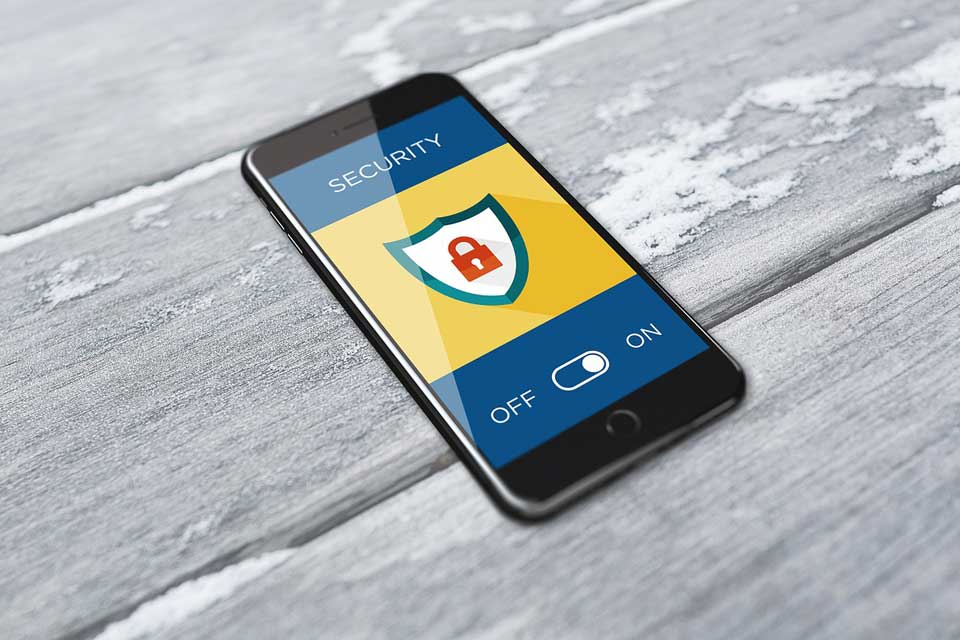
Image by Free-Photos from Pixabay 

Asset Bank integrates with Shutterstock

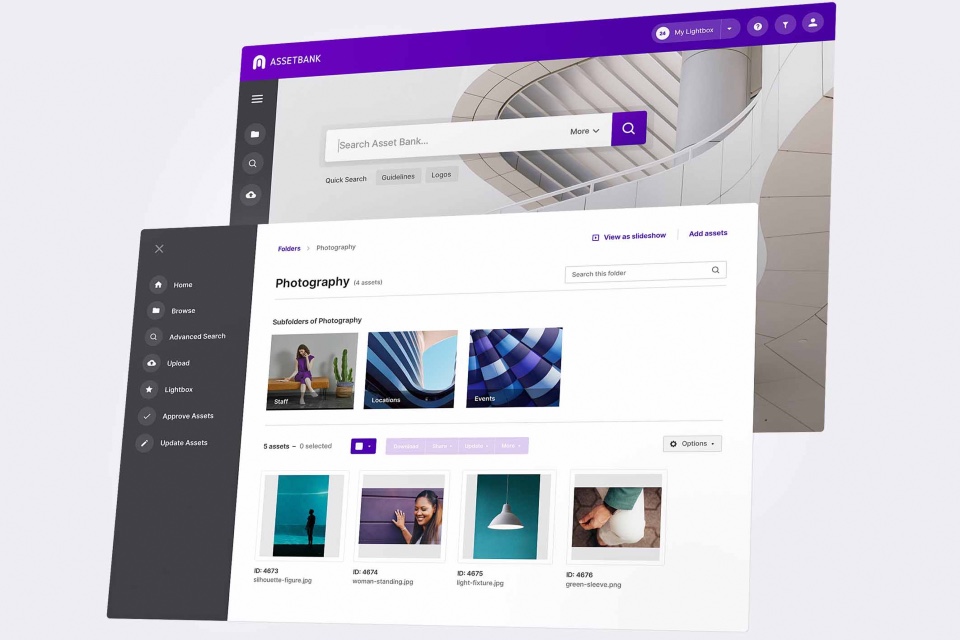
Brighton-based software company Bright has announced the integration of its Asset Bank Digital Asset Management (DAM) system with Shutterstock’s content platform.

Marketers and creatives use Asset Bank to manage digital assets, which can include anything from photographs and imagery to logos, music and video. They use Shutterstock to search, license and download digital media content from third parties. Prior to the integration, all content from Shutterstock had to be entered manually into Asset Bank and tagged individually.

Licensed Shutterstock content is now automatically synchronised within Asset Bank. This not only eliminates the need for images to be uploaded manually, but also tags the content with metadata including the asset description, keywords and categories, making it fully searchable within Asset Bank.

The partners say the integration will save creative teams a significant amount of time when transferring stock images and other content to their own systems. 

Paul Seymour, Head of Asset Bank, said: “We’re always looking for ways to make Asset Bank more useful and effortless for our customers. Integrating with the Shutterstock platform is a natural step along that journey as customers now have immediate access to their licensed content, placing it directly into the hands of the people who use it day to day.”

Digital Insights: Tips to prepare for the Golden Quarter

By twentysix

The peak retail period of October to December (aka The Golden Quarter) isn’t far away and this year it’s going to be an interesting one. Following the “lockdown” disruption, 2020’s peak is going to be a vital sales opportunity for many retailers.

But how can marketers plan ahead when a global pandemic has turned everything upside down? How are consumers going to behave? Will they be in buying mode? Or will the impact of lockdown dampen demand as we’ve seen earlier in the year? Will there be a second wave and what will this mean?

Much of this depends on the course of the virus and as a digital agency, twentysix, we’re not going to attempt to predict that! But amongst the uncertainty, there are things we can still rely on: Christmas is still Christmas; people will still want to buy; and there will be pent up demand and a hunger for deals – all of which will open opportunities for your brand.

With lockdown accelerating online behaviours there is one thing that is certain; digital is going to be an enormous part of the mix for all advertisers. You need to make sure you have the right mix of channels with a solid foundation in search, affiliates and user experience to capture demand, alongside upper funnel activity such as display and social to help create it. But it’s not just about having the channels in place: success will also be about building the agility to adapt to conditions as they unfold – a must in this uncertain environment.

So whether it’s scenario planning, solidifying your technology and tracking foundations, assessing your SEO trajectory, or reviewing your website to ensure your UX is up to scratch, now is the time to start getting ready.

Download twentysix’s guide to the Golden Quarter to unlock 6 key principles to help you create competitive advantage, along with tips from the agency’s digital channel specialists to help you prepare for the most significant quarter of trading we’ll experience for some time.

Download the full guide here

Plan your strategies at the Digital Marketing Solutions Summit

Register for your complimentary guest pass for the hybrid Digital Marketing Solutions Summit today – you can attend in person or virtually!

The Summit allows senior marketing professionals to share forward-thinking ideas, meet new partners and discover new ways to underpin their strategies.

Your free guest pass includes:

  • A bespoke itinerary of relaxed, 1-2-1 meetings with innovative and budget savings suppliers
  • Access to a series of seminar sessions led by industry thought-leaders
  • Lunch & refreshments throughout
  • Unparalleled networking with like-minded peers, who share your challenges

CONFIRM YOUR PLACE HERE

*Virtual attendance options are available*

There is no hard sell at the event but it is a great opportunity for you to gather business contacts for future use.

The Summit takes place on the 13th May 2021 at the Hilton London Canary Wharf.