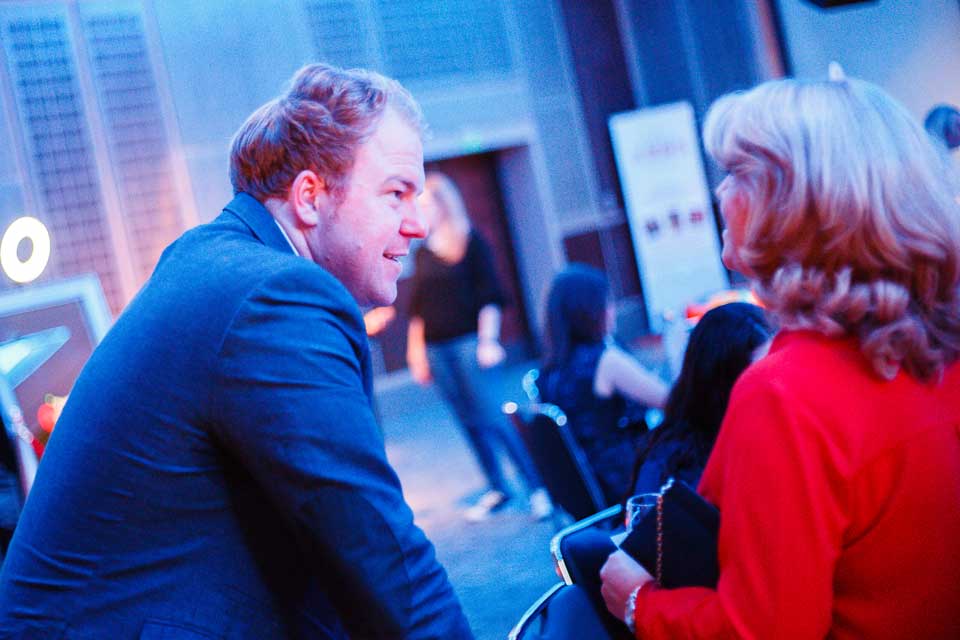
Digital Marketing Solutions Summit | Forum Events Digital Marketing Solutions Summit | Forum Events Digital Marketing Solutions Summit | Forum Events Digital Marketing Solutions Summit | Forum Events Digital Marketing Solutions Summit | Forum Events

All

Print & Digital Innovations Summit – created especially for you

This autumn we are hosting the Print & Digital Innovations Summit – a unique event designed specifically for senior print and marketing professionals like you.

12 November – Hilton London Canary Wharf

Importantly, this small, niche event is unlike traditional busy and crowded exhibitions and conferences. Your personal one-day experience will be created based entirely on your own requirements and interests…

  • Receive a bespoke itinerary of 1-2-1 meetings with suppliers who match your business requirements and upcoming projects
  • Choose to attend a range of insightful seminar sessions hosted by industry thought-leaders.
  • Meanwhile, lunch and refreshments are complimentary.

We have just 55 complimentary guest passes, so register today so that we can start creating your own personalised experience at the Summit.

Do you specialise in Digital printing? We want to hear from you!

Each month on Digital Marketing Briefing we’re shining the spotlight on different parts of the print and marketing sectors – and in April we’ll be focussing on Digital Printing.

It’s all part of our ‘Recommended’ editorial feature, designed to help marketing industry professionals find the best products and services available today.

So, if you specialise in Digital Printing solutions and would like to be included as part of this exciting new shop window, we’d love to hear from you – for more info, contact James Howe on j.howe@forumevents.co.uk.

Here are the areas we’ll be covering, month by month:

Apr – Digital Printing
May – Social Media
Jun – Brand Monitoring
Jul – Web Analytics
Aug – Conversion Rate Optimisation
Sep – Digital Signage
Oct – Brochure Printing
Nov – Creative & Design
Dec – Online Strategy

IAB’s Gold Standard now ABC audited

IAB UK has appointed ABC to conduct a rigorous audit of the current Gold Standard certification process to ensure its transparency ahead of the launch of Gold Standard 2.0 later this year.

The audit, which set out to test the design and thoroughness of our internal process, included a detailed examination of the end-to-end Gold Standard procedure and evaluation of our controls against potential risks. 

The Gold Standard was introduced in 2017 to help the industry combat ad fraud, increase brand safety and improve the digital advertising experience. It currently has 95 companies certified – spanning publishers, platforms, media agencies and ad tech companies – and a further 14 registered to certify. In total, 34 companies have registered and not gone on to be certified. 

The Gold Standard also has six signed up advertiser supporters – ASDA, Coca Cola, JustEat, McDonald’s, Nationwide and Tesco –  all of whom have committed to working only with certified digital advertising suppliers wherever possible. 

Later this year, IAB UK will be launching Gold Standards 2.0, bolstering the certification process and incorporating the Transparency & Consent Framework as a requirement, to address privacy concerns within the digital supply chain.

As part of Gold Standard 2.0, IAB UK plans to employ a third-party auditor to ensure that certified members are upholding the Standard’s principles year round. This appointment is yet to be made.

Tim Elkington, IAB UK’s Chief Digital Officer, said: “By appointing ABC – an independent third-party auditor – to audit the Gold Standard certification process, we are not only providing assurance of its thoroughness, we are also able to ensure that we proactively put in place internal measures to maintain this level of rigour as the Gold Standard grows and evolves.”

Marketing production in highly regulated industries: overcoming key challenges

By Paolo Teotino, senior technology alliance manager, OpenText

An effective marketing strategy today requires an integrated approach across multiple channels to reach an organisation’s target audience. As a result, many different channels are now pivotal elements for a compelling multi-faceted marketing strategy, including email, mobile apps, websites, microsites, social media, webinars and many more.

Yet in highly regulated industries, such as life sciences, the ability to quickly make the most of new digital marketing assets is restricted by compliance requirements and stringent regulation. This presents a major obstacle for organisations trying to use new digital channels to promote new products and services to consumers – with many finding their efforts significantly slowed down as a result.

Sector challenges

The life sciences industry faces some specific challenges. For instance, organisations must comply with the relevant regional regulatory authorities – such as the Medicines and Healthcare products Regulatory Agency (MHRA) in the UK. Consequently, marketing assets for prescription drugs must be accurate, include balanced information on risks and benefits associated with the product and be consistent with the prescribing information approved by the regional regulatory authority. Furthermore, only information supported by strong evidence can be included. Some regulations also require materials to be auditable and even stored in certain ways for certain periods of time.

Additionally, life sciences companies must develop highly effective review and approval solutions to meet the demands of changing relationships with doctors and patients. These industry-specific obstacles are combined with the broader challenges facing rapidly growing global organisations in every industry today, from evolving operational needs and transforming digital processes to overcoming information silos and adhering to broad regulatory guidelines.

In this environment, it’s easy to understand why companies operating in regulated industries are searching for best practices that enable an efficient marketing workflow as well as rapid marketing process innovation. The ability to implement a completely automated platform — replacing manual processes with system-driven workflows and asset lifecycles that use Digital Asset Management (DAM) platforms – represents a major step forward today for businesses looking to reduce overall complexity and cut down on time spent creating a fully compliant marketing campaign.

Automate and speed up

Automating digital asset management is key if businesses are to enable a timely and efficient marketing workflow. Regulatory compliance demands that document management processes such as content creation, review and approval, and content distribution are executed in accordance with industry standards and are auditable. Creating workflows to develop and manage operating procedures for quality control ensures consistency, reliability and efficiency. Furthermore, streamlining collaboration via automation can also lower costs related to the creation, management, and storage of marketing content.

Automation can also extend beyond assets to project management. Marketing projects generate many digital assets. By implementing a content management solution that provides complete digital media supply chain management, teams can track individual elements and whole projects from inception through to distribution. Some systems also offer start-to-finish production accounting tied back to the business systems, providing details on how the budget is spent to bring greater accountability.

Utilising a comprehensive platform to regulate marketing asset lifecycle and unify cross-enterprise production and delivery processes enables organisations to achieve faster innovation, better brand consistency and regulatory compliance. Companies adopting these systems for their marketing project management processes can move more quickly. In fact, one OpenText customer experienced a 70 percent reduction in average time for asset review and approval – reducing the approval process from days to minutes.

While efficiently using and managing digital media assets can be a significant challenge for highly regulated organisations, employing the right technology to automate and streamline processes can transform the marketing function. Companies moving from manual processes to automated DAM platforms will quickly reap the rewards – from reducing time-to-market to complying with regulations – to benefit the entire enterprise.

PODCAST: The digital marketing landscape in 2020

In the latest podcast from Search Laboratory, founder Ian Harris is joined by Rob Marsden, Head of SEO and Pete Whitmarsh, Head of Paid Media, to discuss the role of artificial intelligence and machine learning over the past year and where they expect this trend to go in the year ahead.

They also delve into the effects of voice search and the rise of Marketplaces on SEO and PPC, and the future of data collection and protection for marketers.

Check out the full podcast here: https://www.searchlaboratory.com/2020/01/what-does-2020-hold-for-digital-marketing/

eTailing Summit returns this summer – registration open!

Registration is now open for this summer’s eTailing Summit – Register for your complimentary guest pass today!

What can I expect?

Taking place on July 7th at the Hilton London Canary Wharf, the eTailing Summit allows senior ecommerce professionals to share forward-thinking ideas, meet new partners and discover new ways to underpin their strategies.

It’s entirely FREE for you to attend and your complimentary guest pass includes:

  • A bespoke itinerary of pre-arranged meetings with product and service providers who match your requirements and upcoming projects
  • Access to a series of seminars by industry thought-leaders
  • Networking with like-minded peers
  • Complimentary lunch and refreshments

How Do I Get Involved?

We have just 60 guest passes available, so register your free place today!

Join 60 other senior marketing professionals this summer

The Digital Marketing Solutions Summit is taking place this summer and we’d love you to join us as our guest!

12 May – Hilton London Canary Wharf

This complimentary guest pass will give you the opportunity to meet with suppliers based on your own unique requirements and upcoming projects, attend a series of seminars and network with like-minded senior marketing professionals. Lunch and refreshments are complimentary.

Unlock your guest pass here and join representatives from:

Advanced Diesel Engineering 

Ambassadors Theatre Group

Audible

Blackbird 

Bondi Sands

Bouygues Energies & Services UK

British Arab Commercial Bank

Care UK

Carnival UK

ClientEarth

Conde Nast 

Corinthia London

Cyber Smart 

DTB Sports & Events 

Dufry

Four Seasons UK Collection

Funkin Cocktails

Great British Chefs 

H Club London

Hyde New Homes

Jordan’s Dorset Ryvita

Judopay

JustGiving 

Legal & General Investment Management 

LifeSearch

LV=

Oxfam

Prospect Magazine

Pwc 

Raremark

Sandaire

Simply Business

Stadium

Steak & Co

Swift Direct Blinds 

Telereal Trillium

Ten Lifestyle Group

University of Sunderland London

University of West London

Weight Watchers 

WSP

Yarmouth Stores Ltd & Kirklands 

Confirm your complimentary guest pass here or contact me today to find out more.

Businesses not making most of digitally native Gen Zs

Around one in four (26%) of Generation Z workers say their company isn’t doing enough to attract the younger generation.

That’s according the Digital Natives Report from Advanced, which also reveals that 20% say a lack of diversity and multi-generation experience will hold their company back from modernising its key processes or systems.

In addition, 31% don’t think their company gives the younger generation a voice when it comes to technology adoption.

The report is based on an independent survey commissioned to explore the attitudes of over 1,000 UK senior business decision makers across multiple generations.

The report says that as a new cohort of people – Generation Z – enters the workforce, organisations are increasingly required to accommodate the demands for modern technology, flexible working and a digital environment. These younger workers have been inherently familiar with the internet and technology from a young age, are tipped to be the innovators in the workplace, and are prepared to challenge the technical status quo.

As much as 42% of Generation Z workers would like to see Business Intelligence (BI) in their daily working lives followed by the Internet of Things (40%), Robotic Process Automation (30%) and Artificial Intelligence (26%). Interestingly, 80% of them would be happy to work alongside robotic technology if it meant less manual processes.

Other key findings from the report include:

  • Nearly twice as many Generation Z workers see chatbots in their daily working lives compared to the over 55s. Artificial Intelligence is the most used technology among Generation Z, at 40% – much higher than the over 55s at 28%
  • 64% of Generation Z think a robot would be better at decision making than their boss if it had access to the right business intelligence. 39% of the over 55s agree
  • 40% of Generation Z say one of the most important attributes for a business leader in the digital era is to ensure their leadership team is diverse enough to bring a mix of skills and experience. 46% of the over 55s agree.

Gordon Wilson, CEO at Advanced, said: “It’s this enormous appetite for new technology, along with their innate digital skills, that will help propel businesses into the digital era. In fact, Generation Z is arguably the silver bullet for helping organisations successfully meet the growing pressure to be digital-by-default.

“Like it or not, digital transformation is essential for business growth so our report’s findings will come as blow to many business leaders who are clearly failing to accommodate five generations of workers that each have varying levels of technology knowledge.

“Leaders must embrace the younger generation as a priority – and that means being open to change and a different way of doing things. What’s more, they mustn’t underestimate what this new generation can achieve or pigeonhole them into uninspiring roles. Rather, they need to create roles based on their skills, knowledge and talents.”

Visit here for the full Digital Natives Report.

IAB Rearc initiative to ‘harmonise privacy, personalisation and community’

The Interactive Advertising Bureau (IAB) has called on the entire marketing-media ecosystem to “rearc” digital marketing to harmonise privacy, personalisation and community.

Speaking to 1,200+ senior digital media and technology industry executives at it’s Annual Leadership Meeting, IAB CEO Randall Rothenberg asked industry leaders from the brand, agency, publisher, platform, and technology industries to join together and change the arc of digital marketing “to at last put consumers in the safe, sane, exciting center of everything we do.”

Project Rearc will bring together IAB, IAB Tech Lab, governmental, and other industry/consumer organizations with the goal of creating standards of behavior, codes of conduct, legal agreements, and enabling technologies to address consumer demands for personalization, and privacy.

Top executives, including Alysia Borsa, Chief Business and Data Officer at Meredith Corporation; Steve Katelman, EVP Strategic Partnerships at Omnicom Media Group, and David Spector, Co-Founder and Co-CEO of ThirdLove, immediately joined the call for collaboration.

“The fact that 81 percent of consumers want brands to get to know them well enough to know when to approach them and when not, yet 73 percent of consumers say their concerns over data privacy are growing is not a contradiction,” said Rothenberg. “Rather, it is perfectly consistent with ‘the eternal quest of human beings to be valued as individuals, within the context of living in families, communities, and cultures.’”

The IAB says billions of dollars are at stake. Econometric research by John Deighton (Harold M. Brierley Professor of Business Administration Emeritus at Harvard Business School) unveiled at the conference shows that the elimination of digital marketing personalization would mean a loss of $32-$39 billion in ad revenue on the Open Web by 2025, “with more than 90% of those revenues shifting to walled gardens.”

IAB’s announcement comes in the immediate wake of Google Chrome announcing it will phase out third-party cookies, as well as the first month of the California Consumer Privacy Act (CCPA) being underway.

IAB and IAB Tech Lab have begun convening member-company business and technical teams to draft requirements and consider approaches to support the industry and manage consumer privacy, safety, identity, and other needs in the post-cookie digital marketing supply chain.

“The cookie’s death can lead to a better future for digital media globally. It’s an opportunity to change the practices, controls, and value surrounding personal data to favor consumers. IAB and IAB Tech Lab have already been hard at work, engaging our members to define practical solutions,” said Dennis Buchheim, EVP and General Manager, IAB Tech Lab. “In the coming year, Tech Lab will undertake one of its most comprehensive initiatives to create technical standards, guidelines, and potentially a compliance program to support members – and consumers.”

5 Minutes With… Paul Honey, Strange

In the latest instalment of our executive interview series, we sat down with Paul Honey, Managing Director at Strange, to talk about his business, marketing industry trends, challenges, opportunities and career advice…

Tell us about your company, products and services.

We run a lot of high performing digital marketing campaigns (PPC, Social, Display and SEO) and design and build websites (Drupal, Magento, Shopify, WordPress) for a range of travel, leisure, retail brands and not for profit clients. We’re located in Bournemouth and Bristol and are celebrating our 20th birthday this year. 

What have been the biggest challenges the Marketing industry has faced over the past 12 months?

Performance of marketing campaigns. ‘Subpar’ performance just isn’t sustainable, ‘good’ performance is often not enough to keep brands ahead of their competitors and brands rarely have the budget to be the ‘best’. So from our perspective it’s all about doing things ‘better’. It’s a simple approach to a complicated problem. 

And what have been the biggest opportunities?

We’ve seen a strong rise from brands that are seeking better performance from their marketing budgets and who are looking for a more joined up approach to digital. 

What is the biggest priority for the Marketing industry in 2020?

From a digital point of view, getting ready for the ‘downfall of the cookie’ is a huge priority. For organisations who rely a lot on cookie-based audiences they should be preparing for the day when the main browsers no longer allow marketers to track users using cookies. They could start by collecting as much (GDPR-compliant) first party data as they can from their customers so that they can use this information to build audiences in the future. 

What are the main trends you are expecting to see in the market in 2020?

As Google and Facebook battle it out for client advertising budgets, we’d expect to see a lot of continued innovation in both platforms – which is a great! And with the increased privacy legislation, we’re also starting to see data further up the funnel becoming more significant.

What technology is going to have the biggest impact on the market this coming year?

The humble cookie…Things are changing in digital and the impact is significant.

In 2025 we’ll all be talking about…?

Probably voice search – it’s predicted that 75% of US households will have a smart speaker by 2025 and the UK will be just a bit behind that number. It won’t be long until Amazon’s ‘keyword trigger’ patent comes to life which could allow brands to advertise based on the smart speaker recognising certain keywords. It will start small of course, but the possibilities are just too significant for it not to become a major marketing channel.  

Which person in, or associated with, the Marketing industry would you most like to meet?

Frederick Vallaeys – one of the architects of the Google Ads platform, an ‘AdWords Evangelist’, and current CEO of Optmyzr  – a tool we use widely. It would be really interesting to get his opinion on the future of paid media marketing, and how far it’s come since he helped create Google Ads. 

What’s the most surprising thing you’ve learnt about the Marketing sector?

The rate of change that technology enables new businesses models to emerge is fascinating to watch. There are some very cool companies out there now and whilst not all of them will rise to the heights of the current tech giants, a few undoubtedly will. 

You go to the bar at the Digital Marketing Solutions Summit – what’s your tipple of choice?

More than likely a coffee… 

What’s the most exciting thing about your job?

Each day usually brings something new and exciting, but nothing matches the team delivering work that surpasses client expectations.

And what’s the most challenging?

There’s not one thing that’s really challenging…There are of course minor ‘annoyances’ from time to time.

What’s the best piece of advice you’ve ever been given?

“Spend client’s money like it was your own.” I was given this advice early in my career whilst working in New York City. It’s such a universally good bit of advice for people working in agencies. 

Succession or Stranger Things?

Neither. Watched a bit of both, but they didn’t capture my interest enough to pursue. I did binge watch Vikings though!