Digital Marketing Solutions Summit | Forum Events Digital Marketing Solutions Summit | Forum Events Digital Marketing Solutions Summit | Forum Events Digital Marketing Solutions Summit | Forum Events Digital Marketing Solutions Summit | Forum Events

All

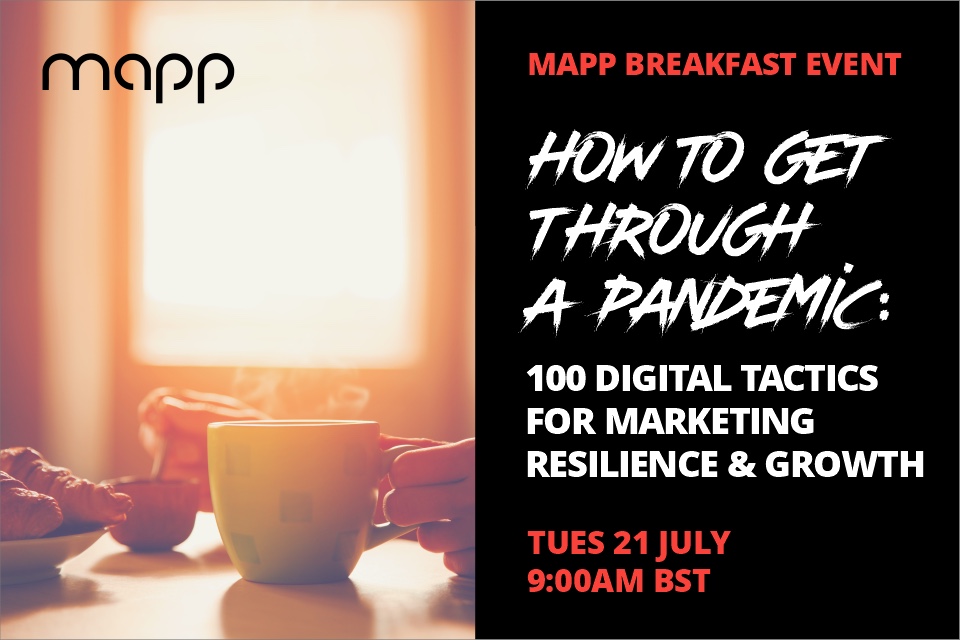
Webinar: 100 Digital Tactics to Get Through the Pandemic and Prepare for Growth

With the emergence of Covid-19 and social distancing, many businesses have had to refocus on their online channels, accelerating the need for digital transformation and better marketing. But competition for online customers has increased. Are you just going through the motions, or are you actually optimising your digital activity? 

To help digital marketers in these uncertain times, Mapp has developed The Digital Marketing Playbook, an interactive guide featuring 100 tactics that are proven to bring results whatever marketing objectives you’ve set for your business. Not only will the Playbook help you to plan your digital programmes more effectively, but it will also help you to build marketing resilience and agility, two essential ingredients for thriving in rapidly changing environments. 

On Tuesday 21st July, at 9AM BST, Mapp will be running an online breakfast event to introduce the Playbook and take you through how to implement some of the most useful digital tactics that it features. 

Here’s what you will gain from attending this popular session:

  1. 100 different tactics and ideas on how to acquire, nurture, grow and retain customers
  2. Best practice on how to implement a selection of the best tactics
  3. Learn how to bake agility and resilience into your marketing programmes 
  4. Easily prioritise tactics focusing first on the ones that will bring the largest ROI with the least effort 
  5. A Costa Coffee eGift Card worth £8 if you attend the live webinar and are among the first 300 people that register.

You can confirm your attendance for How to Get Through a Pandemic: 100 Digital Tactics for Marketing Resilience and Growth on the Mapp Digital website by clicking this link

WHITE PAPER: Optimising your eCommerce site

By Kate Norton, Selesti

With so many businesses now needing their digital sales to prop up any bricks and mortar revenue more than ever, the landscape for eCommerce sites and the amount of competition is evolving every day. It’s vital therefore to ensure that your brand’s voice cuts through the noise. Simply having the best quality products, the widest range of options, or the lowest prices alone just isn’t enough. 

Growing your online income requires more than simply listing your products/services on your website and hoping your customers will find you. Whether you’re transitioning from the high street or looking to grow an already established website, or just starting out, ensuring you optimise your brand experience is key to increasing your footprint and reaching your eCommerce business goals. 

The first step for any successful online store is crafting a well rounded strategy that ties your marketing KPIs and objectives to your overall business objectives. Without a clear idea of how you see your business growing in the years ahead, it is impossible to effectively measure success. In our white paper we look at how to build your brand strategy using SMART goals, understanding the best channels to focus on, planning your marketing mix and building your brand with USPs and a value proposition.

Having the best strategy in place will only work, however, if you know your customers inside and out. What are they doing when they aren’t shopping with you? What real world issues are they concerned with, and how does your brand resonate with them? We cover how to ensure you have the right data for your customers, and where to find it, as well as how to grow your customer personas into usable resources for targeting your marketing and growing your revenue. Not only is it important to look at who your customers are, but also how they interact with your brand. We take a look at how to track your customers’ journey across multiple touchpoints and how to use this information to refine your tactics and address customer pain points. 

Finally, the look and feel of your site will have a massive impact on how customers view your brand. Issues with the user experience or overall site design can cause valuable consumers to disengage from your brand and move to the competition. We’ve included some best practice examples for optimising your website design to get you started. However, real success comes from testing your design. Our whitepaper aims to help you to understand the ways in which you can utilise user testing, heat mapping and screen recording, and A/B testing to increase your conversion rate.

In our whitepaper, we take a multi-disciplinary approach to your eCommerce website optimisation journey. Helping you to combine strategy, data and analysis, and iterative design testing techniques to continually drive the right people to your store and build revenue. 

Click here to download the White Paper.

Find your path to success at the Smarter Payments Summit

Have you secured your place at the upcoming Smarter Payments Summit? This event is now virtual, so you can attend remotely via a video link!

8th September – RSVP here to secure your place.

The Smarter Payments Summit is a highly focused event that brings the payments transaction industry together for virtual business meetings and interactive webinars.

Why attend?

– Pre-arranged online video meetings with solution providers of your choice
– Experience a virtual Forum from the comfort of your own working environment
– Attend a tailored programme of inspiring webinars
– Easily compare and benchmark potential products, services and solutions
– Attendance is entirely free of charge, which includes entry to our webinars

A more targeted approach

We understand that your time is precious, valuable and limited. You tell us who you want to meet, and we handle all the details. We arrange all meetings in advance based on your preferences, by providing you with details on solution providers, products and services.

Unique Virtual Summit Experience

Our event concept of pre-matched one-to-one meetings is facilitated by our proprietary matching software with live video meetings, enabling our live Forum experience virtually with five easy steps.

  1. Confirm your place at the Summit
  2. Let us know your future procurement trends
  3. Select the suppliers you wish to meet with
  4. Log on to your personal event itinerary page
  5. Click on video links to join meetings with buyers

Your complimentary ticket includes: An itinerary of one-to-one online video meetings with suppliers based on your requirements and upcoming projects, and a series of insightful and inspirational webinars.

Or if you have any questions then please do not hesitate to contact us today!

WHITE PAPER: Outsourcing Partnerships vs Service Providers

Webmart explores the differences between a partnership and service provider relationship, and how this can impact the result that marketing teams desire. The difference between a partnership or service provider can drastically impact the way a brands personality comes across in the end result. 

The following guide discusses an approach to finding and selecting the right outsource provider for you and your brand. And how a two-way, transparent approach can help build a long standing and productive partnership.

Plus, ways to ask the right questions to find a suitable partner for your brand. A partner becomes the extension of a marketing department that can offer advice and collaborate to get the most out of what is needed, so it is vital to find the right one.  

In addition, Webmart discusses how technology can help maximise the human, by automating processes that do not add any value whether they are done by a computer or a human. By using technology, this frees up a human’s time to focus on creativity, which will help boost performance further. 

To view the guide, click here, or get in contact with Webmart to discuss partnership opportunities on 01869 321 321 or enquires@webmartuk.com.

INDUSTRY SPOTLIGHT: Woven brand engagement agency

By Hollie Denby, Head of Sales & Marketing, Woven

Successful branding? It’s about consistency.

As a brand agency with over 20 years’ experience, we know that every interaction with your brand is an opportunity to win a customer. Or lose one.

Businesses understand this when it comes to meetings or phone calls with existing or prospective customers. But they often drop the ball when they translate their brand into the online world.

A brand’s online experience matters as much as its offline one. A business that sells a great product and that has great people can still be undone by a poorly optimised website. It can still be hampered by unengaging email campaigns and a bone-dry social media presence. And it can still fall down due to lacklustre design and forgettable messaging.

Your online brand is a many-sided thing – a blog, a website, an Instagram feed, a banner ad, an automated chatbot. But however it manifests, it must always convey who you are: your values, your identity, and the benefit you bring to the world. 

This is what we do at Woven. We make sure you’re always at your best by putting who you truly are into everything you do. So that no matter how someone interacts with your brand – whether it’s offline or online – you know they’re getting the best possible version of yourself.

Because in a world where brands strive to be everywhere – online, on social media, in print and out of home – it’s never been more important for your voice to be interesting, different and – yes – consistent.

Find your consistent voice at woven.agency.

Digital Marketing Solutions Summit: There’s still time to claim your virtual place!

Have you secured your virtual place at the virtual Digital Marketing Solutions Summit taking place on Thursday 16th July?

Your attendance is entirely flexible and will allow you to source budget-saving and innovative solution providers to prepare for every eventuality.

Plus, you can enjoy all the benefits of the event from the comfort of your own home, including a series of LIVE webinars hosted by industry experts.

We only have a few virtual places remaining – RSVP here to secure your place.

Google Analytics Segments Vs Filters

By Ben Johnston – Head of SEO & Data Analytics – ESV Digital

Learn the difference between Google Analytics segments and filters, what they are, how they work and when you would use each of them...

One of the most common questions I’m asked about Google Analytics is the difference between a segment and a filter and the main use case of each of them. I’m often asked why you would ever use a filter when a segment does the same job and vice versa.

In today’s post, I’m going to briefly run you through what segments and filters are, how they work and the reasons for using each of them.

WHAT IS A GOOGLE ANALYTICS SEGMENT?

A segment in Google Analytics lets you view your metrics based upon specific criteria, for example only organic or paid traffic. They allow you to change your data on the fly and you use the whole of the Google Analytics interface just focusing on that data and, crucially, they do not change your data the way a filter does.

A segment can be applied retroactively, so you can see how your organic performance was last year and so on, and you can also create your own segments based on certain specific conditions. You can even share those custom segments with other Google Analytics users.

You can apply a segment to your Google Analytics like so:

Click the Add Segment button and you’ll see the list of pre-configured ones. As you can see, there’s a lot to play with and with the ability to import new segments from the Google Analytics gallery and create your own, there’s plenty of flexibility there to investigate your data from a variety of perspectives.

Segments are great and an essential part of your Google Analytics arsenal, but they’re not without their weaknesses.

Weaknesses Of Segments

As handy as it is being able to alter your data on the fly, there is inherently some lost functionality compared to filters. Firstly, there is less flexibility in what you can do with a segment than a filter – you cannot exclude a specific IP address or series of IP addresses with a segment, for example.

They also have a habit of triggering sampling within Google Analytics, where the data shown in a report is less than 100% accurate. If your dataset is small, you should be OK, but segments do bring this on much sooner.

WHAT IS A GOOGLE ANALYTICS FILTER?

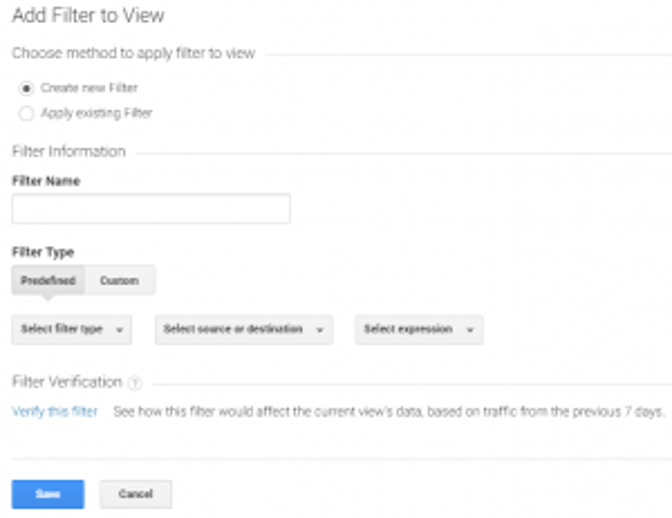
A filter is applied to a Google Analytics view and permanently changes the way that the data is collected for that view, rather than changing the way it’s reported on the fly. Unlike a segment, a filter will not change your data retroactively.

Filters offer a great deal more functionality than segments – as well as just replicating the capacities of segments, which would be prudent if you have a high amount of traffic, you can also make sweeping changes to the way your data is collected, processed and reported. You can use a filter to rewrite the URLs in your page reports, for example, or to double-check the hostname or simply to exclude a section of traffic which you know is not relevant (your own team, for example, or bots). You can also unleash the power of regular expressions to really take control of your data.

Filters are a far more powerful solution than segments, but they don’t offer the same flexibility. You would use a filter for a specific task within a reporting view (excluding your own office’s traffic, for example), rather than using it to check the performance of a specific metric in most cases.

Weaknesses Of Filters

With the power of filters comes responsibility in their use. They permanently change the data in a view from the moment they’re applied to the moment you remove it. There’s no going back. They also can’t be applied retroactively in the same way a segment can. It’s this permanence, plus the additional Google Analytics knowledge required to set up a filter that is the key weakness of them.

In line with best practice, you should always have a completely unfiltered “All Website Data” view, to ensure data continuity and to use for checking that your data is coming through properly. You should then have other filtered views depending on the kind of requirements your site has.

At the very least, we suggest having the All Website Data view and a view which filters out your own IP address and the IP address of any partner agencies/ other offices etc, although we would typically go much deeper than this with a Google Analytics setup.

WHEN TO USE SEGMENTS & FILTERS

A segment is the best way to isolate a certain metric, channel or device in your reporting view and apply that to your historic data. If you want to see how many people have come to your site over the last three years from Facebook on their tablets, a segment is the way to go.

If you need to permanently change the way your data is collected, such as excluding your IP address, removing bots, or rewriting your URLs so that they’re easier to read in reports, you’ll be looking for a filter.

The key thing to understand about filters vs segments is that there is really no “vs” at all. They’re different tools for different tasks and a good setup uses them together. For most reports, you’ll be relying on segments to isolate and highlight different metrics, but to ensure that your data is as clean as it can be, you’re going to need filters to be involved.

Unsure of how well your Google Analytics setup stands up to best practice? Get in touch with ESV Digital and let us see what we can do to help. Follow us on Facebook and Twitter for the latest updates.

WEBINAR REWIND: 5 Steps On How To Retain & Drive Customer Loyalty

If you missed last week’s Selligent webinar on how to retain & drive customer loyalty, don’t worry – You can re-watch the entire session online!

Understanding what your customers love most about your brand is the foundation to driving a successful loyalty program. Acquiring new customers can be time consuming and expensive. So once brands have worked hard to grow their loyal customer base, how do they then keep them that way – and why is it even more important during times like these?

The latest webinar in Selligent’s Masterclass series saw the company’s Director of Marketing for Northern Europe, Sam Counterman, and Customer Success Manager, Taylor Whiteley, outline five steps brands and marketers can take to develop a successful customer loyalty program.

Topics included:

  • Brand Loyalty: Short- and Long-term Strategy
  • Moments of Impact: Understanding the Customer Journey
  • Universal Consumer Profile: Customer Data Segmentation
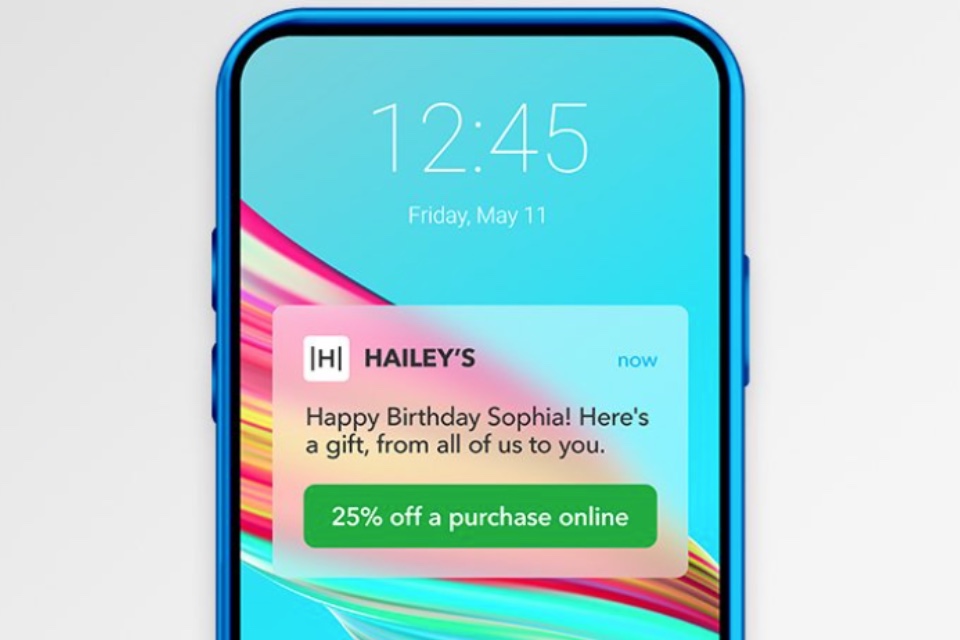
  • Utilising Mobile Push: Omnichannel Communication
  • When and how to add value when it matters most

Click here to WATCH AGAIN!

WHITE PAPER: Direct mail for e-commerce brands in a digital world

By Webmart

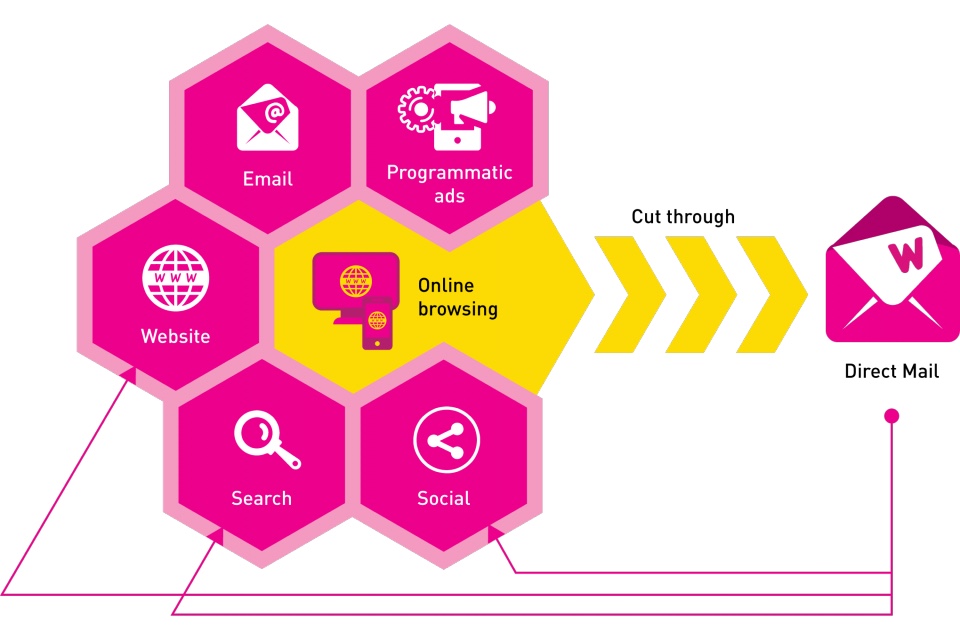
The argument over whether digital marketing or direct mail is the most effective to engage customers is widely contested. There is a variety of research that suggests that one is better than the other. However, at Webmart, we believe that the channels should be used together to complement one another to get the most out of the marketing mix, increase brand awareness and boost performance. 

You will, no doubt, invest a lot of time, effort, and money into optimising your digital presence as an e-commerce brand. After all, your business is online, it makes sense to invest in ensuring your online presence is as strong as it can be, but achieving cut through can be challenging! With the support of mail, the value of your brand awareness can be enhanced and cut through can be increased. Direct mail can be incredibly effective in increasing the brand value and growing an online presence. 

With the ever-changing environment in these uncertain times, the digital market is becoming more saturated as digital use goes through the roof. Which is great news for e-commerce brands, but the cut through rate to get the reader’s attention is even harder to grab. 75% of people that have used digital for the first time have suggested that they will continue to use it when things get back to “normal” (McKinsey Digital, 2020). Which means that there is an even greater opportunity to encourage new prospects and customers onto e-commerce sites. 

To help with this, many brands are utilising traditional channels like direct mail to achieve that cut through and improve the performance of their digital campaigns. For example, mail recipients spend an average of 31% longer engaging with the brand’s social media content and remember the online content for longer by an average of 44% (MarketReach/Neuro-Insight, 2018).

Download Webmart’s whitepaper to understand how direct mail can help to increase your ROI on campaigns, and how we use the levers approach to make sure that best practice is achieved to enhance direct mail campaigns for e-commerce brands.  

Elite Business: The only platform of resource for business growth

At Elite Business, we’re passionate about championing new business. Providing fresh perspectives and representing disruptive solutions, we’re interested in the startups and SMEs that are spearheading Britain forward. From tech unicorns to entrepreneurs transforming healthcare with AI, we cover the movers and shakers making enterprising exciting.

Our online platform covers up-to-the-minute content and presents a unique angle on the things enterprises need to know, from maximising the potential of mobile to setting the world alight on social media. We also gather the best and brightest voices in the community to share their experience. To get the latest information click the link below and subscribe to exclusive updates in the industry.

Click here to subscribe today!