Digital Marketing Solutions Summit | Forum Events Digital Marketing Solutions Summit | Forum Events Digital Marketing Solutions Summit | Forum Events Digital Marketing Solutions Summit | Forum Events Digital Marketing Solutions Summit | Forum Events

All

Improve your skills on lockdown with our bespoke online courses

During these times of great uncertainty, one thing we all have more of is time. So why not use it to learn new skills and improve existing ones with our newly available and unlimited annual courses?

These are specially-curated online courses designed to help you and your team improve expertise and learn new things.

The Sales & Marketing and Management, Leadership & Business Operations online learning bundles, provide you with over 100 courses, which cover all areas of both professional and personal development:

  • Converting Leads into Sales Certification
  • Creating a Marketing Plan Certification
  • Closing Techniques Certification
  • Cold Calling Certification
  • SEO for Business Certification
  • GDPR in The Workplace Certification
  • Project Management Foundation (Small Projects) Certification
  • Project Preparation Certification
  • LinkedIn for Business Certification
  • Vlogging Certification
  • Customer Retention Certification
  • Negotiation Skills Certification
  • Networking for Sales Professionals Certification
  • Online Reputation Management Certification
  • PR Certification
  • Presentation Skills Certification

And many more!

Find out more and purchase your course online here.

For just £99 (usually £149), you can share the courses with your colleagues over a 12-month period.

Additionally, there are a variety of bundles available on all spectrums;

  • Personal & Professional Development
  • Healthcare
  • Sports & Personal Development
  • Human Resources
  • Customer Services
  • Health & Safety
  • Education & Social Care Skills
  • Sales & Marketing
  • IT & Personal Development

Book your courses today and come out of this stronger and more skilled!

WEBINAR: Website visitor tracking: driving business forward in the current climate

CLICK HERE TO REGISTER FOR WEBINAR

Lead Forensics helps more than 10,000 organizations across the world supercharge their business, their websites and their sales pipelines. The innovative tool helps B2B professionals generate leads, convert existing pipeline prospects, win back lapsed clients, and transform the service they provide existing customers.

Utilizing intelligent reverse IP tracking technology and a global leading database of business IP addresses, Lead Forensics identifies your site visitors and alerts you in real-time. Users are also provided with contact details of key decision-makers and website visitor journey analytics. This unlocks your site’s potential and keeps you one step ahead at all times.

Our latest webinar showcases how reverse IP tracking software like Lead Forensics can support your business in a remote working environment. In these unprecedented times, more and more decision-makers and their teams are working from home. To grow your business and maximize success, B2B professionals need to embrace the right tools to drive their business forward.

Holly Tripp, EMEA Event Marketing Manager at Lead Forensics, will be hosting the webinar, ‘Website visitor tracking: driving your business forward in the current climate’ on Thursday 16 April 2020 at 11am GMT and 2pm EST/11am PST. Holly will be talking about the following:

  • What is website visitor tracking?
  • Do I need it if I use Google Analytics?
  • Reverse IP tracking: everything you need to know

Take advantage of a complimentary FREE trial when you register to see for yourself!

Link to register: https://bit.ly/3c82tSj

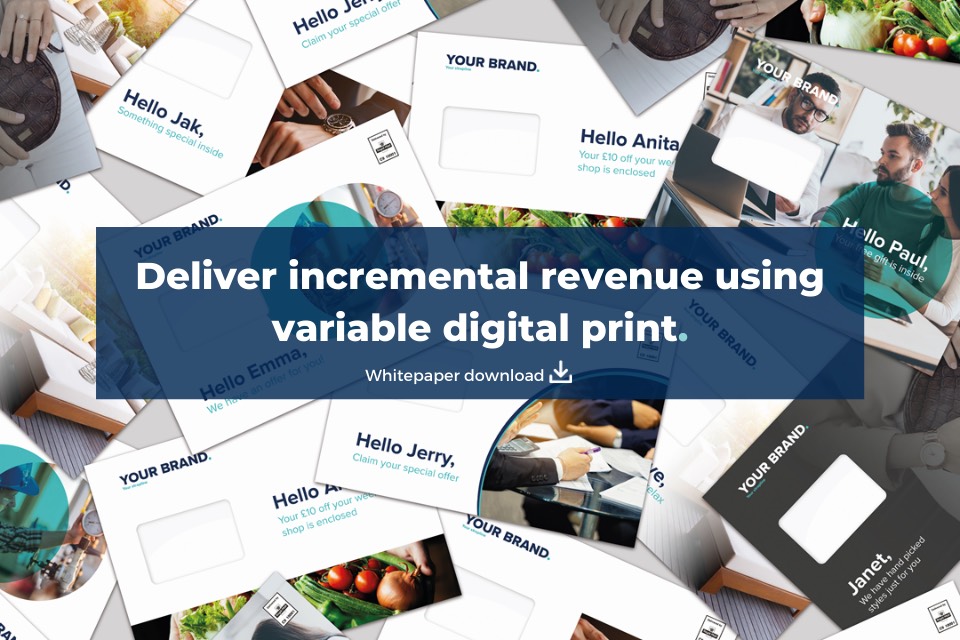
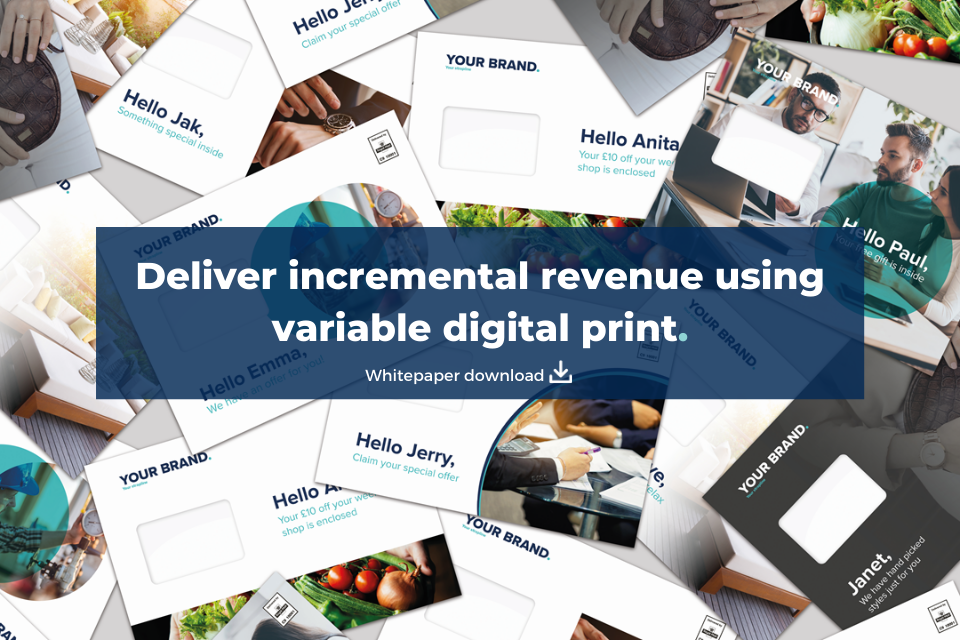
WHITEPAPER: Businesses can deliver incremental revenue using variable digital print

Using variable digital print delivered one retailer 128% incremental revenue vs control – that’s according to an industry report from the Go Inspire Group, which also reveals that simply increasing design vibrancy, delivered a 20% uplift vs control.

The research determined that reflecting a customers’ individual preferences, by utilising enhanced personalisation and variability to tailor product imagery, offer and a range of other factors, can deliver a monumental difference in incremental revenue, from direct mail campaigns. 

The study also shares further recommendations for variability including:

• Personalised catalogues and brochure content

• Personalised barcodes 

• Personalised links to digital content

• Personalised offer periods 

• Segmented event invitations 

Visit here for the full paper and all its recommendations.

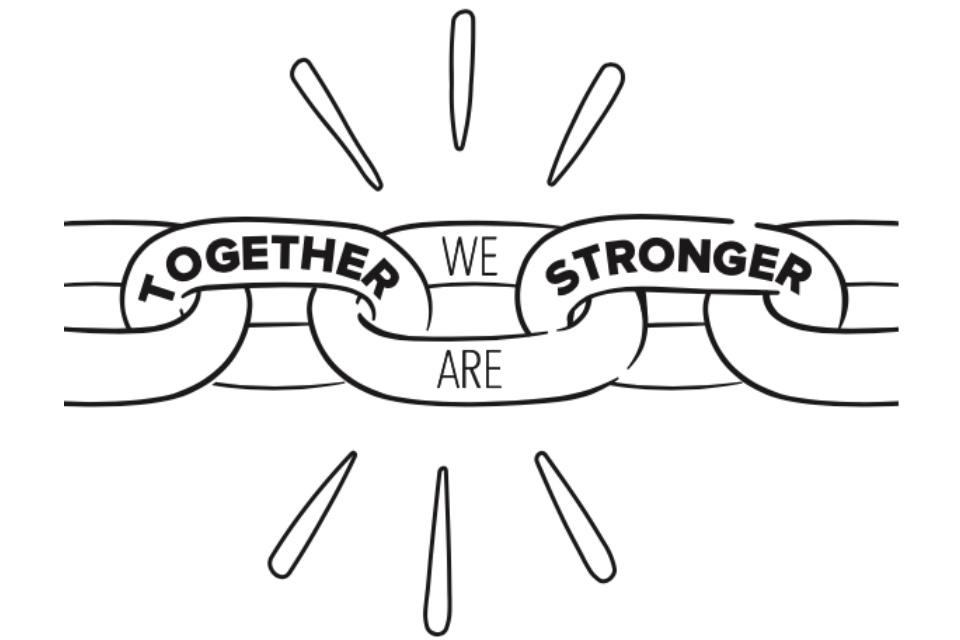
Printer launches ‘Together We Are Stronger’ Poster Campaign to Support NHS

Printing firm Where The Trade Buys has launched a campaign to show support for the NHS during the Covid-19 pandemic.

As part of its ‘Together We Are Stronger’ campaign, the company is calling on people to print off its posters and colour them in, to their own tastes, and share them on social media.

The campaign launch coincides with the UK public’s overwhelming response to ‘Clap for our Carers’, which saw people head for their balconies, windows, and doors, to applaud NHS health workers in their efforts to fight Covid-19.

Louise Stephenson, Managing Director at Where The Trade Buys, said: “The pressure the NHS staff are under at the moment is unimaginable. At a time of crisis, it is imperative that we all pull together and there’s no better way to do that than through social engagement.

“While the majority of us are limited to the confines of our own homes, it is a great way to interact with our families and celebrate our unsung heroes. Let’s share these posters on social media and show the NHS we are all behind them and put a smile back on their face.” 

The company is urging people to share the posters between family and friends and engage with the hashtag #TogetherAtHome on social media, and will re-tweet anyone who tags it too.

To download the free poster, visit https://www.wherethetradebuys.co.uk/together-at-home

Discover the secrets of marketing success this July

Due to the current situation relating to the outbreak of COVID-19, we have taken the decision to postpone the Digital Marketing Solutions Summit until 16th July – so you now have more time to register!

This event is a small, niche event unlike other large, busy exhibitions and conferences.

If you were unable to attend the previous date, we would love for you to join us as our guest.

This unique event is entirely complimentary for you to attend – reserve your place here.

  • Meet new suppliers, based on your business requirements and upcoming projects
  • Attend a series of insightful and inspirational seminar sessions
  • Networking with like-minded peers
  • Enjoy complimentary lunch and refreshments

If you are able to make the new dates, then please RSVP here.

WEBINAR: Personalization – Get heard above the digital noise

CLICK HERE TO REGISTER FOR WEBINAR

In light of the current climate, business leaders globally are making significant changes to the day-to-day running of their organizations. The events industry is in hiatus, face to face meetings are not possible and your prospective customers are likely to be spending time in quieter offices with fewer colleagues around, or even working from home. 

It’s safe to say that now more than ever, marketers and consumers alike are relying on digital media and technology. So, for maximum success while working remotely, an enhanced digital strategy and innovative personalization software are absolute necessities to ensure keep your sales pipeline full.

At Webeo, we’re passionate about personalization. We know that, with the right strategy and tech, you’ll skyrocket your marketing measurables.  And, in turn, reap the rewards — whether that’s better engagement, increased conversions, higher retention-rate, or enhanced customer acquisition.

Whatever your business goals, personalization can help you cut through the noise. 

Webeo will be hosting a complimentary webinar, ‘Personalization: Get heard above the digital noise’ on Thursday 23rd April at 3pm BST.  Presented by Webeo’s Charlotte Everson, Social Influence and Rich Media Marketing Manager, Charlotte will share actionable insights on the following 

  • Remote working: what does it mean for B2B organizations?
  • Cutting through the noise with relevant content
  • Why your B2B website is your most valuable asset
  • Your digital personalization strategy
  • How personalization can support your business in a remote working world

Webeo would like to invite you to join them for this webinar. To register, please click on this link – https://www.webeo.com/personalization-heard-above-digital-noise

Live webinar details

  • Date: 23rd April 2020
  • Time: 3.00 pm BST

If you have any questions as to how Webeo can support you today, please get in touch with Webeo directly on enquiries@webeo.com.

For further information, please visit www.webeo.com

Businesses can deliver incremental revenue using variable digital print

Using variable digital print delivered one retailer 128% incremental revenue vs control – that’s according to an industry report from the Go Inspire Group, which also reveals that simply increasing design vibrancy, delivered a 20% uplift vs control.

The research determined that reflecting a customers’ individual preferences, by utilising enhanced personalisation and variability to tailor product imagery, offer and a range of other factors, can deliver a monumental difference in incremental revenue, from direct mail campaigns. 

The study also shares further recommendations for variability including:

• Personalised catalogues and brochure content

• Personalised barcodes 

• Personalised links to digital content

• Personalised offer periods 

• Segmented event invitations 

Visit here for the full paper and all its recommendations.

Coronavirus: ‘Content marketing imperative grows’

Many marketing organisations lack the necessary capabilities and processes to keep pace with a growing content marketing imperative amid the coronavirus outbreak, according to new strategic report from the CMO Council.

Cleary, the impact of COVID-19 on face-to-face business interactions, particularly large gatherings, has been swift and pervasive.

Content will need to pick up the slack, according to Donovan Neale-May, Executive Director of CMO Council and author of the strategic brief, Making Content Marketing Convert.

“Marketers must act quickly and decisively to increase the impact, scope, reach and return of their content marketing investments in 2020,” said Manuel Hüttl, Senior Vice President Europe beim CMO Council. “Our research also shows there is a critical need for marketing organizations to bring more discipline and strategic thinking to content specification, delivery and analytics.”

Developed in partnership with NetLine the report provides insights into the problems marketing organisations face in elevating the business impact of content development, distribution and lead conversion. It also provides a concise set best practices, along with a self-assessment check list for lead performance improvement.

Among CMO Council research insights that underscore the problems and shortcomings in current content marketing initiatives:

  • Only 12 percent of marketers believe their content marketing programs targets the right audiences with relevant and persuasive content.
  • Only 21 percent say they are sufficiently partnered with their sales counterparts in developing and measuring demand generation programs.
  • Most view their content marketing process as ad hoc, decentralized and driven by internal stakeholder, rather than customer, interests.
  • While 88 percent of business buyers say online content impacts vendor selection, just nine percent think of vendors as trusted sources of content.

The report offers commentary and advice on the top 10 essentials for effective authority leadership-driven content marketing:

  1. Partner with credible + trusted sources
  2. Produce relevant + compelling strategic insights
  3. Add customer-contributed views + validation
  4. Present authoritative, newsworthy and enriched content
  5. Engage qualified, verified and predisposed audiences
  6. Target the whole influencer, specifier + buyer ecosystem
  7. Embrace multi-channel distribution, promotion + syndication
  8. Authenticate content consumption and buyer engagement
  9. Ensure lead legitimacy and compliance 
  10. Cultivate, Activate and convert prospect flow

It also offers a set of best practices for lead lifecycle management. These practices cover:

  • Functional alignment between marketing and sales
  • Lead qualification—prioritization and scoring
  • Lead nurturing and relationship development
  • Hand-off and optimization of the conversion process
  • Campaign measurement

Download the report here.

How to create and activate a brand strategy

As brands and businesses currently face huge uncertainty due to the current global situation, many will be finding the most suitable and appropriate ways to keep their companies afloat. Dan Dufour, Brand Strategist for theTeam, writes this comprehensive guide for businesses on ‘How to create and activate a brand strategy’…

This blog looks at how a good brand strategy can help you change the way people think, feel and act. But you have to embed it across the whole customer and employee experience, not just the brand expression.

Branding is, and always has been, about making an emotional connection with people. Changing the way they think, feel and act, whether that’s influencing them to choose a product or service, support a charity or join a social movement. But what are the key building blocks to success? Let’s investigate.

Is your focus on brand management or leadership?

The first step is to agree your approach to branding. Do you see it as a tactical tool to manage consistency, or as a strategic tool that should run through the DNA of the whole organisation?

The writer David Aaker makes the distinction between ‘brand management’ and ‘brand leadership’. Brand management has a shorter-term perspective and is based on building and measuring image and impact. Brand leadership has a longer-term strategic perspective, driven by what the brand stands for, and it uses the brand strategy to direct the whole organisation, from employees to products. This may include ‘brand-driven innovation’, where the brand strategy is used to inspire new ideas and filter out old ones through a clear purpose.

In the excellent A very short introduction to branding, Robert Jones describes the difference between managing and leading: “Branding may be a relatively unimportant, tactical tool, and the brand manager normally sits a long way down the hierarchy, with a small team and little power. Their role is limited to managing communications or policing design.” Alternatively: “branding is seen as a strategic activity, encompassing all the ways an organisation touches its customers. The brand team is usually large or powerful, and brand gets talked about a lot at the top of the business.”

Personally, I like Dom Boyd’s definition of ‘brand entrepreneurship’: “Strategists now need to be less ‘thinkers who hold the strategic line’, and more like activists who proactively sniff out competitive commercial opportunities and make them happen.” In other words, you need to be business savvy. A brand entrepreneur helps an organisation step into the future by setting out a compelling purpose. They make change happen by driving commercial innovation.

What audiences are you targeting?

The next step is to be clear about which audiences you are targeting and why. This is where audience segmentation is helpful to manage ‘brand stretch’. Because few of us have the luxury of marketing budgets big enough to target the whole of the general public, or to shift spontaneous awareness figures.

Going deeper than just gender, life stage, geography and socio-demographics, a good segmentation covers attitudes and beliefs, consumption, or giving patterns for charities, and should be linked to media channels, in order to be helpful for marketing purposes. This will enable you to both create a good brand strategy and put it into action, based on target audience segments.

What is your brand positioning?

This is the heart of a brand strategy. If your brand is the space you occupy in somebody’s mind, your brand positioning plants the seed. Brand positioning is commonly defined as positioning your brand in the hearts and minds of your customers. What do you want them to think – and feel – about your brand in order to inspire action?

Brand positioning is commonly defined as positioning your brand in the hearts and minds of your customers. What do you want them to think – and feel – about your brand in order to inspire action?

Brand strategy models and platforms come in all shapes and sizes and the jargon can be confusing. Charities favour vision, mission and values, while future brand leaders are taught purpose (why you exist), personality (how you behave and communicate) and proposition (what you offer).

Over recent years, there has been a big trend for Brand Purpose, where brands look to define why they exist and the value they create for society. This is driven by an increasing desire for brands to have a positive impact on profit, people and the planet. It is why sustainability is increasingly important and why brand projects extend beyond marketing to complement corporate strategy.

Some brands look to have one core proposition, while others will have several propositions for specific products that sit within one framework. In the commercial sector a proposition will often convey the benefit of a product, while in the charity sector a proposition might convey the benefit of support. Sometimes the proposition becomes an external strapline, while other times it provides a springboard to inspire a strapline. Don’t forget, a good proposition should be underpinned by what you want people to think, feel and do to be effective.

It is common to involve customers and employees in the development of a brand strategy and story to make sure it is truly inspiring. This can be complicated and time consuming but is the best way to create a brand with a strong sense of purpose, pride and commitment. Typically, different options are researched with key audiences before refinement. It is increasingly common to use human psychology (behavioural economics and human emotions) to inspire people to action.

One brand or more?

Alongside an audience segmentation and proposition development you’ll need to decide whether you need one brand, or a portfolio of them for specific products. This is called ‘brand architecture’ and is essential if your brand is to remain intact and not unravel. There are different models you can follow such as Freestanding, Unified (also known as Monolithic), Branded House, House of Brands or Hybrid, with pros and cons to each. Sadly, sub-brands are often created by default, rather than being directed by a clear brand strategy. So, we’d recommend agreeing your brand architecture during a brand development process, not leaving it until later as can be the temptation. In the era of Brand Purpose, corporate master brands like Unilever are becoming just as important as their portfolio of product brands from Dove to Marmite. At the same time, many charities are trying to tame a plethora of unnecessary sub-brands to move towards a more unified approach.

Have you embedded your brand strategy throughout the customer and employee experience?

Now you have your brand strategy in place, it is time to bring it to life. Most people start with the brand expression, visual identity and tone of voice. But branding goes much further nowadays.

Branding is increasingly embedded across the whole customer and employer experience, including UX (user experience) and CX (customer experience) design, not just marketing communications.

There has also been a shift in mentality when it comes to managing the brand expression. Where some people seek control and consistency, others allow more freedom of expression within set parameters. Where brand guidelines were once the bible, practical tools and online learning are now more commonplace. In this context, the job of a brand manager is to coach, educate and inspire.

Have you done enough to engage your people with your brand?

There can be a tendency to rush to take a new brand to market. But don’t forget, your people are a ready-made salesforce and every interaction we have with a brand informs our perception of it, including with its people. There have been numerous stories of bad behaviour having a negative impact on brand trust and reputation. But embedding your brand strategy and values within your culture should mitigate this. Ultimately your brand should be a guiding light, to inform decision making and conduct throughout your business.

Do you have a clear plan for digital communications, marketing campaigns and content?

The next step is to engage your target audiences with your brand to build the right perceptions and influence action and loyalty. Your approach will largely depend upon your budget. Most people start with digital marketing, search engine optimisation (SEO) and Google ad-words to ensure the right messages are seen by the right people at the right time, together with a content plan. Which social channels do you want to invest in curating, for which audiences and for what purposes? What content will you put out to connect people emotionally with your product or cause?

Which social channels do you want to invest in curating, for which audiences and for what purposes? What content will you put out to connect people emotionally with your product or cause?

Do you have measurement and processes in place to make improvements?

Brand development is an ongoing creative process and is never set in stone. We test and learn, curate and evolve. But improving your brand is always best when based on audience insight, so make sure you have good measurement in place. Brand trackers are common, measuring metrics such as prompted awareness, understanding, consideration to purchase or support, attribution and trust. Measuring the sentiment towards a brand online is also popular, often called ‘buzz scores’. ‘In campaign’ measurement can allow you to optimise your creative in real time. Then there is the hard evidence, such as sales figures, income, customer satisfaction, trust pilot rankings and staff retention.

We recommend creating a dashboard of key measures you can report to senior management at key intervals. Regular brand health checks or audits are also a good idea, as is a brand steering group with representation from across your organisation to help you create, embed and improve the brand going forward.

Unlock your potential at the Digital Marketing Solutions Summit

The Digital Marketing Solutions Summit is taking place this summer and we’d love you to join us as our guest!

16 July – Hilton London Canary Wharf

This complimentary guest pass will give you the opportunity to meet with suppliers based on your own unique requirements and upcoming projects, attend a series of seminars and network with like-minded senior marketing professionals. Lunch and refreshments are complimentary.

Unlock your guest pass here and join representatives from:

Advanced Diesel Engineering 

Ambassadors Theatre Group

Audible

Blackbird 

Bondi Sands

Bouygues Energies & Services UK

British Arab Commercial Bank

Care UK

Carnival UK

ClientEarth

Conde Nast 

Corinthia London

Cyber Smart 

DTB Sports & Events 

Dufry

Four Seasons UK Collection

Funkin Cocktails

Great British Chefs 

H Club London

Hyde New Homes

Jordan’s Dorset Ryvita

Judopay

JustGiving 

Legal & General Investment Management 

LifeSearch

LV=

Oxfam

Prospect Magazine

Pwc 

Raremark

Sandaire

Simply Business

Stadium

Steak & Co

Swift Direct Blinds 

Telereal Trillium

Ten Lifestyle Group

University of Sunderland London

University of West London

Weight Watchers 

WSP

Yarmouth Stores Ltd & Kirklands 

Confirm your complimentary guest pass here or contact us today to find out more!